
by Shari Murphy Coote and Friends
THE FOURTEENTH SEASON, 1985
A MAJOR CONTRIBUTOR
Before another paragraph is written, something needs to be said. Thank you, thank you, thank you, Crystal Motto, for your mighty contributions to this memoir. Crystal is responsible for providing most of the photos you see in these posts. Crystal came to the Playhouse as a staff member in 1988 and took over as general manager/artistic director when I left in 1995. She has contributed to and supported the Playhouse in numerous ways ever since.
Crystal, without your help, this memoir would be very dull. Thank you for all the hours you’ve spent and continue to spend culling through old photos, scanning old photos, and sharing them with me to share with those who read our efforts. I should have acknowledged your contributions much sooner than this, and I regret that! Thanks for all you’ve done and continue to do for the Playhouse, Crystal.
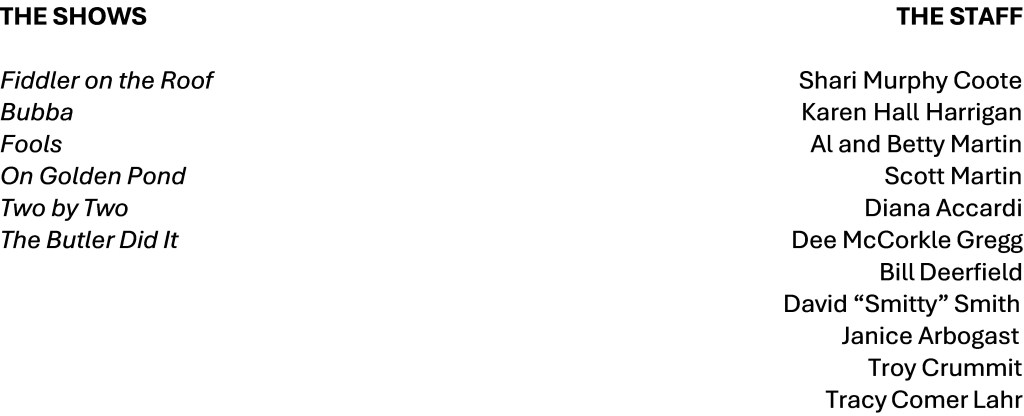
TWO GREAT MUSICALS, TWO GREAT COMEDIES, ONE LOVELY PLAY, AND AN OUTRAGEOUS BRITISH FARCE
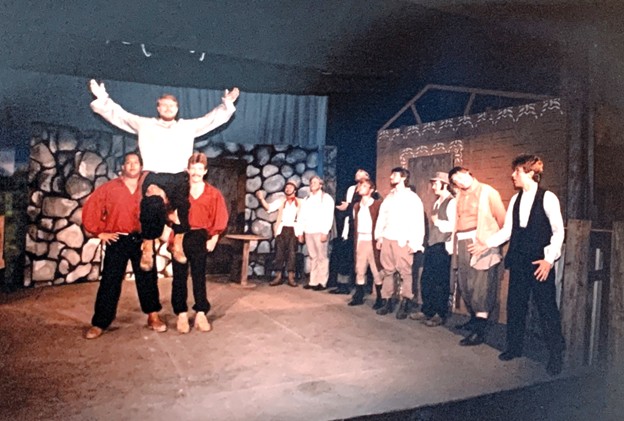
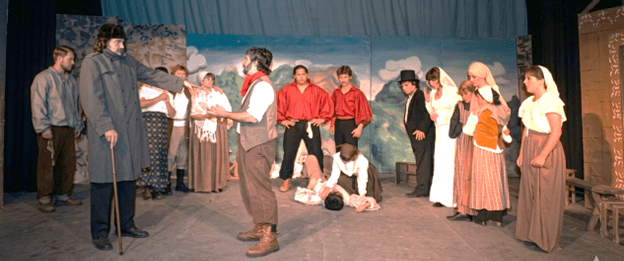
We opened the 1985 season by reprising Fiddler on the Roof, and once again Rick Taylor played Tevye, the Russian Jewish dairyman. Our first production of the show in 1977 had given us our first sellouts and SRO audiences, and this production started us off with more of the same. I directed the show again and fell in love with it again. It’s such a charming, but poignant story, with lovable characters, comic characters, mean characters, young kids, teens, young adults, middle-agers, and older adults. It also has absolutely wonderful music.
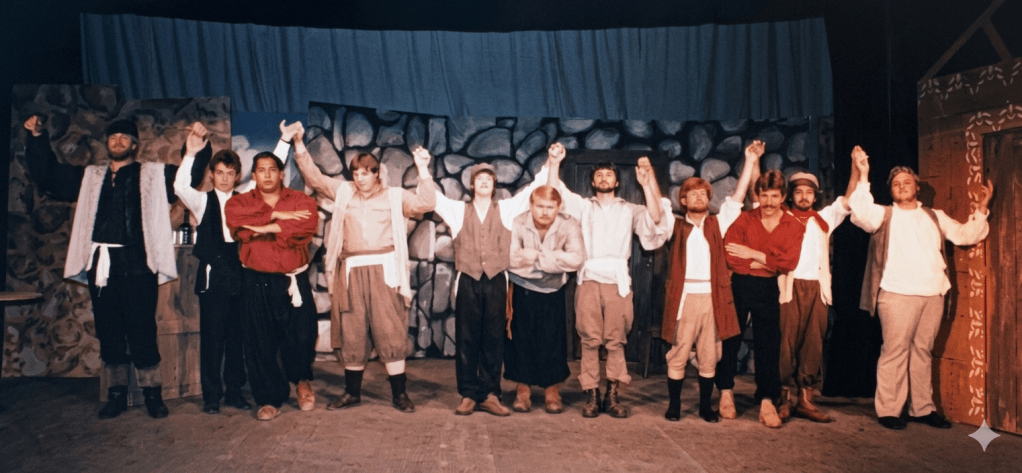
One of the most amazing numbers in Fiddler is “The Bottle Dance.” The young men of the village dance a very Russian dance, complete with Cossack leg drags, squat and kicks, twirling moves, and more, all while balancing a wine bottle on their hats. I’ll bet that 95% of the audience thinks those bottles are glued to the crown of those wide-brimmed hats, BUT! THEY ARE NOT! At the end of the dance, the men tip their heads forward, the bottles fall off, and the guys catch them in one hand. Then they remove their hats with the other hand, lift the hat and bottle high, and take a bow, always to even wilder applause! It’s just great. An absolute showstopper.
There is a little bit of a trick, but not really. Those hats have to fit each guy well, AND they must have a perfectly flat, hard crown. Finally, a thin layer of wax circling the bottom of the bottle keeps it from slipping, but it isn’t glued. The bottle can still be easily tipped off at the end of the dance. We always rented the hats from a big costume house. It was worth the cost, and I can’t believe we don’t have a photo of the bottle dance from either production!
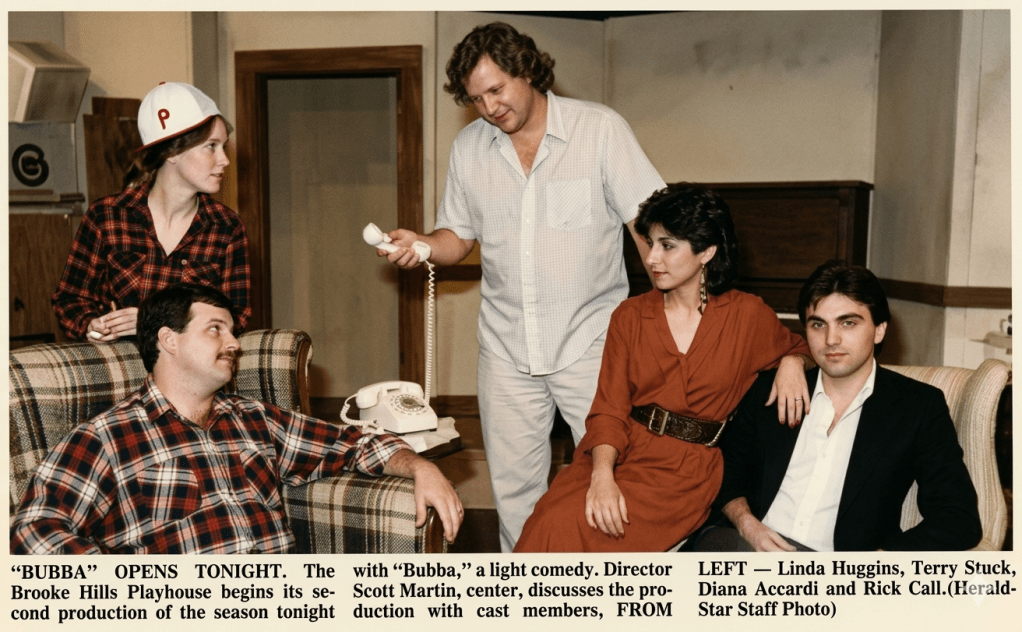
Our first show at the Brooke County Museum, after remodeling the second story in 1982, had been a cute, little four-character comedy called Bubba. I don’t remember how many we seated at the museum for the show, but we produced it as a dinner-theatre, and the tables would have cut into the number of tickets we could sell, 60-80 per performance, I think. Anyway, we felt the show deserved a larger audience. So it followed Fiddler.
Linda Huggins played Bubba in both productions, but her supporting cast at the museum was Amy Charlton, Rick Taylor, and Russ Welch. At the Playhouse, Linda was supported by Diana Arrcardi, Rick Call, and Terry Stuck. Scott Martin, back for a third season, directed. We hit a little pot of gold when we found this show. It made money for us in both places!
Al Martin directed Fools, the third show of the season, a charming Neil Simon comedy based on a short story by the great Russian writer Anton Chekhov. Later in this article, you’ll read how this show is one of Bill Deerfield’s favorites.
I directed On Golden Pond, and I was pleasantly surprised when I read the script. I had seen the movie and cringed several times at the F-bombs dropped by the two leads, a couple in their late seventies. The play opened on Broadway in 1979, and guess what? The script for the stage play has no F-bombs! “Poop!” That was as vulgar as the play got, and it was much more believable. Al and Betty Martin (in their seventies at the time) played the leads, and I know neither of them would have used the F-word, even had it been in the script.
Our second musical of the season was the small-cast musical, Two by Two. This show is a delightful retelling of the Noah story. The eight-character show featured some of our most seasoned actors and was directed and designed by Scott Martin, who also acted in both Fiddler and Fools.
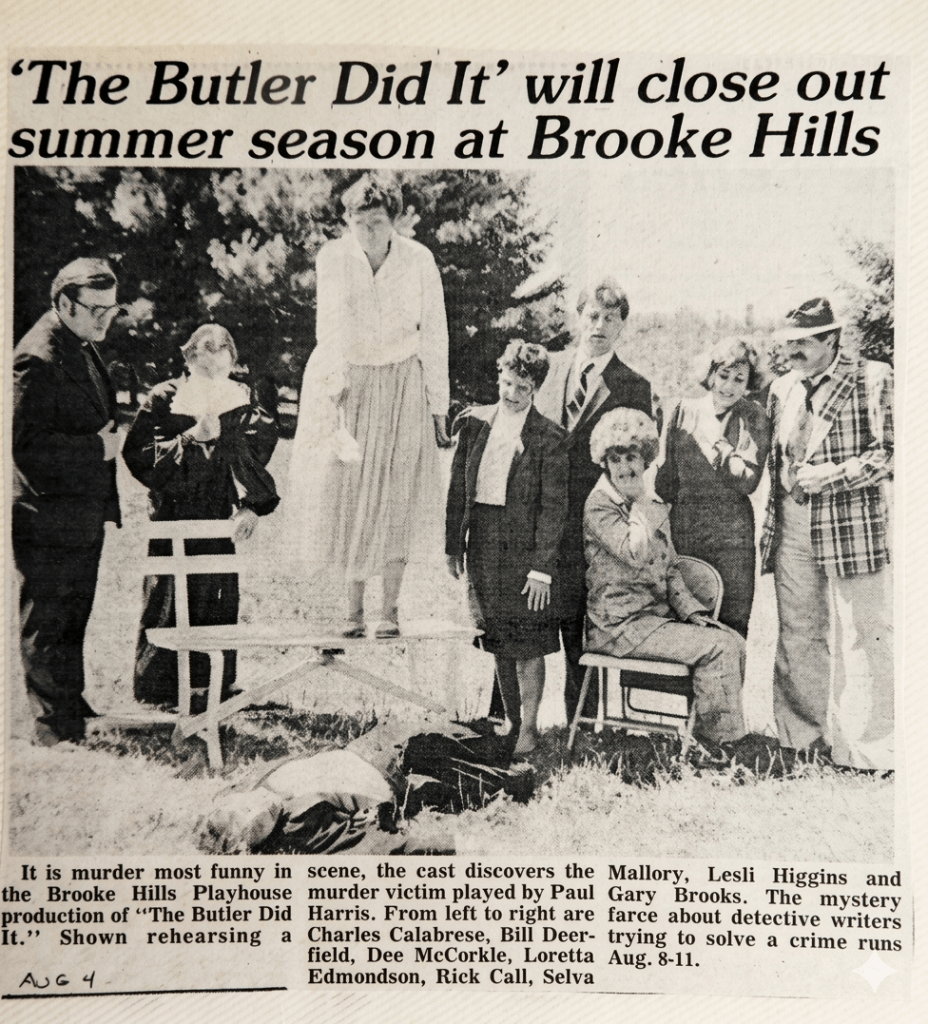
Karen Hall was back for her third summer, and she had recruited four or five other West Liberty State College students to be on the staff with her. Karen did some designing, a lot of tech work, and directed What the Butler Saw, the final show of the season. The fact that there is no butler in the show, a crazy British farce, may have had some people scratching their heads on the way out of the barn. Without a doubt, however, they had laughed themselves silly while watching the actors work hard at covering up affairs, hiding from each other, and attempting to avoid all sorts of mayhem.
As always, it was the staff that made the summer season click, and this season had another great group with some returning staffers and some new kids. As in other summers, the staff worked hard and still managed to have a lot of fun. There seems to be real joy in most people involved in theatre. They enjoy entertaining and being entertained. So many can make work fun. Probably, the best thing about the summer was that this staff didn’t have to re-side the barn!
MY WISH FULFILLED
At the end of the 1984 season, we had lots of beautiful, old, weathered barnwood removed from the barn during the re-siding project. As we took off the old wood, we stacked it out behind the barn. A few people had expressed interest in the weathered wood, and we encouraged them to take what they wanted. Then I had a brainstorm.
I had wanted to replace the Playhouse proscenium for years. The original proscenium, installed in 1972 when we turned the barn into a theatre, wasn’t very appealing. That proscenium was made from large canvas-covered stage flats. It was originally painted black, and after a few years, it was re-painted barn red. That old barnwood inspired me. I knew that a proscenium made with the old barn wood would look great, so the guys working on the project started stacking the flatter, straighter boards in a “Do Not Take” pile.
After the final strike in 1984, Terry Stuck remembers carrying a bunch of the stacked barnwood upstairs and placing it in front of the stage. A day or two later, with the barn closed up for the winter, Russ Welch and our new great friend Greg Meyers took on the task of tearing down the original proscenium and replacing it with a beautiful new one made from pieces of the old barnwood siding.
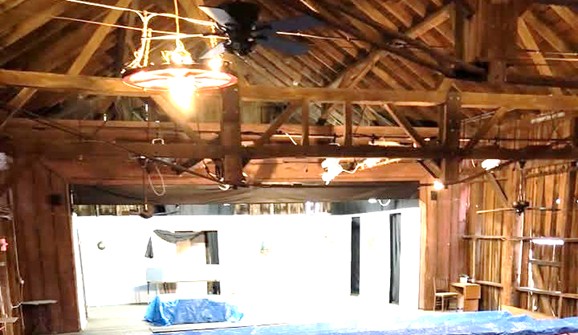
Sometime in October, Russ drove me out to the Playhouse. He made me wait on one of the high, back porches while he went in through the tool room, up the back stairs, turned on the work lights, walked up through the house, and opened the porch door. I stepped inside and nearly cried. The new proscenium was stunning. It was perfect. It was beautiful. Russ and Greg had done an incredible job. I loved that new proscenium. It really said “BARN” to me. (Actually, even when I enter the theater today, I still get a little flutter when I look at that beautiful proscenium.)
The following summer, I made a new rule absolutely forbidding anyone, under any circumstances, to put a nail, screw, or staple into that beautiful, weathered, barn siding proscenium. I knew once something went into that wood, it would set a precedent, and soon the old wood would be destroyed. New pine planks were attached to the back side of the barnwood returns left, right, and center that could be used to secure scenery or hang hooks for costumes, props, or whatever, but NOTHING was to go into the barn siding!
The next time you are at the Playhouse, check out the one massive board that came off the barn. It’s a 2”x26”x8’ piece of barnwood that now has pride of place in the center of the top of the proscenium. It’s a beauty. (It’s obscured by a crossbeam in the photo. Argh!)
When I returned to the Playhouse in 1997, Crystal Motto, the new managing director, had affixed a plaque to the barn wall beside the proscenium which read something like this:

BILL DEERFIELD REMEMBERS
Bill Deerfield was born in Waco, Texas, but he moved to Weirton, West Virginia, when he was two in 1966. Sadly, Bill’s mother died when he was 10, and eventually the parents of a friend became his legal guardians. He went to Madonna High School, where one of his teachers and directors was Anne Roberts, a Playhouse actress and director, and her husband, Skip, also a Playhouse volunteer and actor, worked on scenery for his wife’s productions. [NOTE: To read about the Roberts, see Part 15-B.] Bill was also a classmate of John and Jim Wilson, former Playhouse staff members. [NOTE: To read about Jim and John, see Part 22.]
While Bill was at Madonna, he was in a show each year: Arsenic and Old Lace, Applause, Wonderful Town, and Carnival. He graduated from Madonna in 1982, and that fall, he entered West Liberty State College, majoring in Psychology and minoring in Theatre. “The Social Security from my mother,” said Bill, “enabled me to go to college.” While at West Liberty, he worked tech on several shows, and he acted in The Front Page, A Midsummer Night’s Dream, The Lark, and others.
Bill was steered to the Playhouse by another West Liberty student, Karen Hall Harrigan, who had been a Playhouse volunteer all during her high school years and who had joined the staff as our Technical Director in 1982. [To read about Karen, see Part 20.] By the time Bill joined the Playhouse staff in 1985, following his junior year in college, he was a seasoned performer and well on his way to becoming a jack-of-all-trades as a capable carpenter, painter, electrician, and make-up artist. His first summer at the Playhouse was a busy one for him. Bill was in five of the six shows during our fourteenth season.
He was Avram, the Bookseller in Fiddler on the Roof. “I remember one thing very distinctly about Fiddler,” said Bill. One night, someone put something nasty-tasting in our drinks for the big “To Life (L’Chaim)” number. Trying to show joy through singing and dancing, while nearly gagging, was not the least bit funny.” [NOTE from Shari: We worked with a lot of first-time actors, and every director tried to remember to make it plain that we didn’t tolerate “jokes” during a performance. They are absolutely NOT funny. Sadly, we weren’t always successful.]
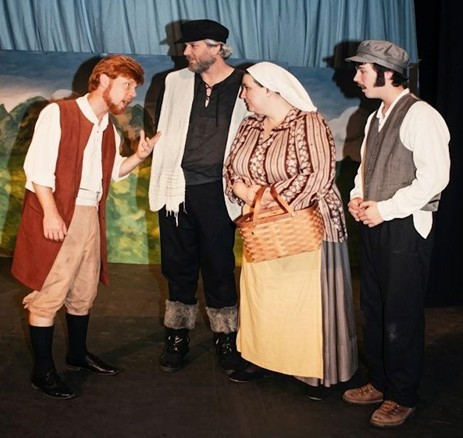
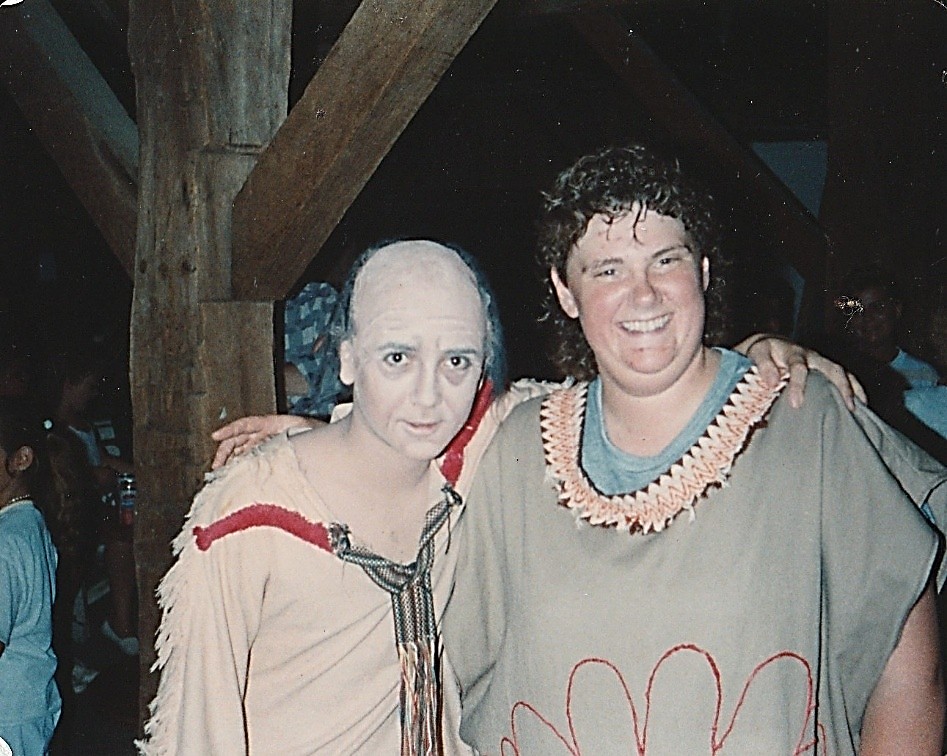
Bill said, “Being in Fools was one of the highlights of my career. Al Martin directed, and he knew exactly how the show should be played. The story takes place in a small Ukrainian village wherein all of the inhabitants have been cursed with stupidity for the past 200 years. When a tutor arrives in town, hired by the town doctor, to educate his daughter, the curse may be lifted. I played Slovitch, the butcher, whose biggest fear is that when the town’s curse of stupidity is finally broken, he will find out that he was really stupid to begin with.
“Scott Martin had returned for a third summer at the Playhouse after a break of a couple of summers. He played Count Gregor Yousekevitch, the villain who is trying to get the beautiful, but very stupid, daughter of the town doctor to marry him. Watching Scott in that role was like taking a Master Class in Acting. It was amazing to see him work, his voice, his expressions, his body language, even his makeup. He did it all so well, and I was in awe of his talent.
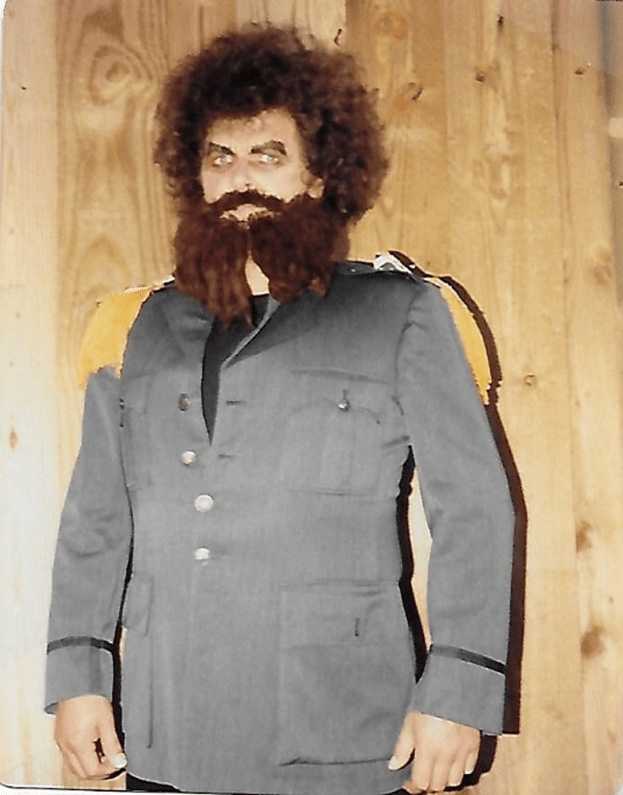
“Jim McElroy played the girl’s father, and he was so funny, just great. Jim played the guy big (big gestures, big movements), loud, and exaggerated, like an over-the-top farce. Our audiences laughed every time he entered, and they loved the show. My part wasn’t large, but the show was so well done, I was proud to be a part of it.”
The fourth show of the season was On Golden Pond. We did the show to put our long-time, super volunteer, Al Martin, and his wife, Betty, on stage together. I wish I had copies of Betty and Al’s resumes that included acting, directing, designing, constructing, and painting. If you put one show on each piece of a large roll of toilet paper, you would easily run out of squares before ever running out of shows!
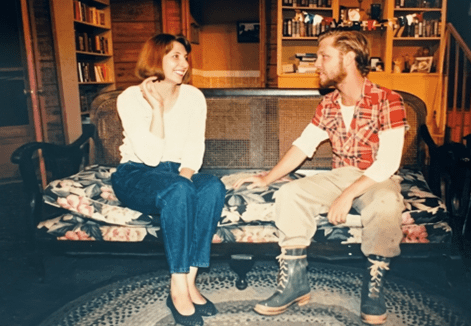
Bill played the jovial mailman in the show. “I loved this show,” said Bill, “but the very solid supporting cast had a huge task, taking care of Al. Not really taking care of him, but he really struggled with the lines, and we had to keep him cued. I know he didn’t like doing it, but he put up cue sheets all over the set—on lampshades, lying on an end table, lying on the shelf of a bookcase, in a newspaper.
“There was one bit that was particularly memorable. At some point, the phone on an empty stage starts to ring. Al’s character is upstairs. The phone rings and rings, and one evening, someone in the audience yelled out, ‘Will someone answer the goddamned phone?’ at which point Al nonchalantly entered and answered the phone. It was a good piece of business that really showed how an audience can become totally engaged in a live show.”
Following his graduation in 1986 from West Liberty with a Psychology major and Theater minor, we were lucky enough to have Bill return to the Playhouse for a second season. He started that season with a bang, or rather a big OOPS!
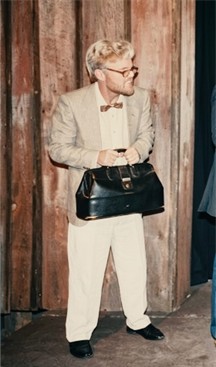
“I was cast in the opening show, a Neil Simon musical, Promises, Promises,” said Bill. “One evening during the performance, I was flirting with one of the girls offstage and missed my entrance, which left Rick Taylor hanging. I apologized over and over, but I felt bad about it for 35 years! At the celebration for the Playhouse’s 55th season in 2021, we went around the room relating a favorite Playhouse memory. I stood up, told the flirting story and how it had haunted me, and then apologized to Rick again!
“I was in two other shows that year, a great little play, also by Neil Simon, called The Good Doctor, based on works by Anton Chekov. The show had nine scenes, each a little play unto itself, and the cast members got to play a couple of different characters each. It was a nice challenge for the cast.
“There was a second lousy incident in this show. During one of my three scenes, this older woman entered with one of those cucumber masks! What a shock to those of us onstage! I don’t know what she was thinking. I’m sure she got a laugh, but the scene wasn’t right that night, and her fellow cast members let her know it.
Photo left: Bill in Promises, Promises, 1986
“I was also in the last show of the season, A Bedfull of Foreigners, a crazy farce full of close escapes, disguises, and duplicity with lots of laughs.
As much as I enjoyed being on the Playhouse staff, acting in a number of shows, and living in the park for those two summers, the best part was meeting Heather Vulgamore, another staff member in 1986, who became my wife, 29 years and many experiences later.”
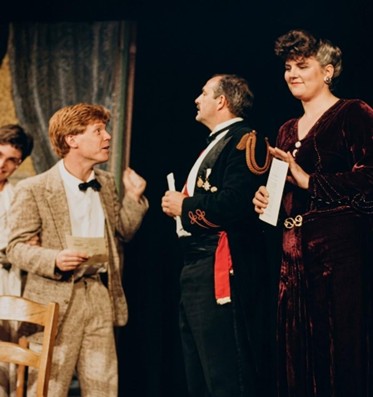
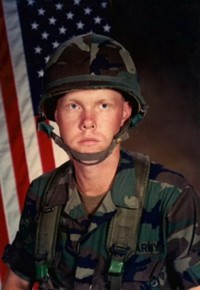
In October 1986, Bill enlisted in the U.S. Army. “I wasn’t ready for grad school,” said Bill, “and it seemed like a good option. Sadly, Heather and I decided to break up. She was still in college, and I was going to be far away, but truthfully, enlisting was one of the best things I’ve ever done.
I was sent to Korea for a year, and I ended my 4-year tour at the Walter Reed Army Institute of Research in Washington, D.C. doing research. I also learned survey research, how to put together questionnaires, and I did some teaching. I never thought I could teach, but I learned that I could, and that I liked it.
“After Korea and leaving the army, I lived in Silver Spring, Maryland. I enrolled at the University of Maryland and earned my teaching degree. I taught middle school and high school English and theatre for seven years, and in 2000, I moved to San Diego and continued teaching. Over the next 23 years, I directed and produced 20 musicals and 20 straight shows in local high school and community theaters. lived in Silver Spring, Maryland. I enrolled at the University of Maryland and earned my teaching degree. I taught middle school and high school English and theatre for seven years, and in 2000, I moved to San Diego and continued teaching. Over the next 23 years, I directed and produced 20 musicals and 20 straight shows in local high school and community theaters.
“They were wonderful years, directing kids and building their confidence. I’m most proud of giving kids a chance to get on stage and shine. And I carried a lot of the stories from Brooke Hills Playhouse with me, especially the cucumber mask one! I used them, good and bad, to illustrate what can make a show great and what can make it cheap or amateurish.”
Although I used some incidents from my Playhouse life as cautionary tales for my students over the years, what impacted me most from my Madonna High School, West Liberty State College, and Brooke Hills Playhouse worlds was the idea of having a home and a safe place to be myself. I wanted to share the opportunity that was given to me with my many students. My classes and shows were “home” to many students over the years, and for that I am thankful and proud.
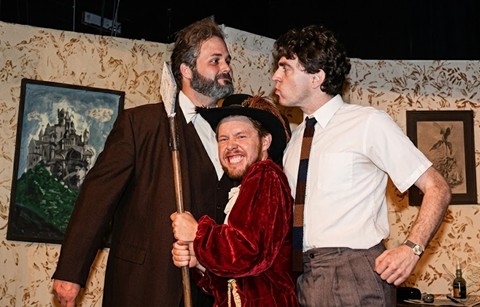
In 2009, Bill flew to Maryland to see a sick friend, and he and Heather renewed their relationship. After a year of bi-coastal “dating,” Heather moved to San Diego. In 2013, Bill left teaching and took a job in Alternative Education, which, with his psychology background, was perfect for him. Ironically, Playhouse veteran Jay Keener and his partner Jake Welch eventually moved to San Diego, also. Jay is Heather’s step-brother, and Jay and Jake moved in with Bill and Heather. When Jay and Jake decided to marry in 2015, Heather and Bill decided they would marry, too.
It wasn’t long before the Deerfields realized they both missed theatre, so they started working with a community theatre in 2016, with Heather acting and Bill directing. In 2023, Bill retired from teaching altogether, and he and Heather moved back to the Ohio Valley, where Brooke Hills Playhouse welcomed them back with open arms.
In 2025, Bill directed the crazy comedy Always a Bridesmaid at the Playhouse with Heather in the cast, and he is slated to direct the sequel to Bridesmaid, The Second-Chance Ladies’ League, also at the Playhouse, in 2026.
But how’s this for a little irony? Bill said, “Teresa (Hoffer) Torlone was one of my drama students for four years back in San Diego. She graduated in 2007 and came east for college. She met someone, and they started a family. Teresa and I have been Facebook friends for years, and she saw my posts about auditions for the play I was directing (Always a Bridesmaid) in the 2025 Playhouse season. Since she lives outside Pittsburgh, she decided to surprise me and audition for our show. I cast her immediately!”
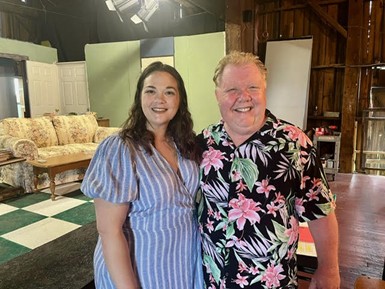
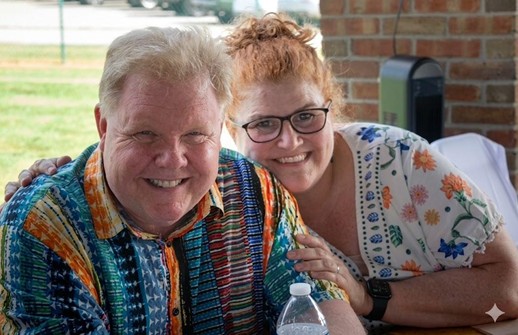
Bill and Heather Deerfield, with a combined 9 summers on the Playhouse staff and stage when they were college students, are once again delighting Playhouse audiences with their many combined talents, forty-one years after they first arrived!
DAVID “SMITTY” SMITH REMEMBERS
“The two years I spent at the Playhouse were two of the best years of my life,” said Smitty when I called him to chat and collect his Playhouse memories. Now that’s a lovely way to start a conversation!
Smitty graduated from Steubenville “Big Red” High School in 1981 and started going to West Liberty State College (now West Liberty University) in 1983. “I never thought about trying out for plays, but when I was in a speech class, I was drafted for a part in The Lark. I played The Executioner of Joan of Arc!
“Another great thing happened to me at West Lib. In 1983, I met Sheila Bischof. She is so special, and we married in August 1987, not long after graduation.
“But back to theater and West Liberty! After The Lark, the next thing I knew I was hanging out in the theatre department. I acted in a few other plays. I remember playing Diamond Louis in The Front Page. I also started working on set construction, and I ran the lights.
“One day, early in 1985, another student, Karen Hall, talked to me about the Brooke Hills Playhouse, and she said they were hiring for the summer season. She also said she’d be working there again, and she made it sound great. She convinced me to sign up, and I never regretted that decision. Those summers were wonderful! I have great memories of being at the barn.
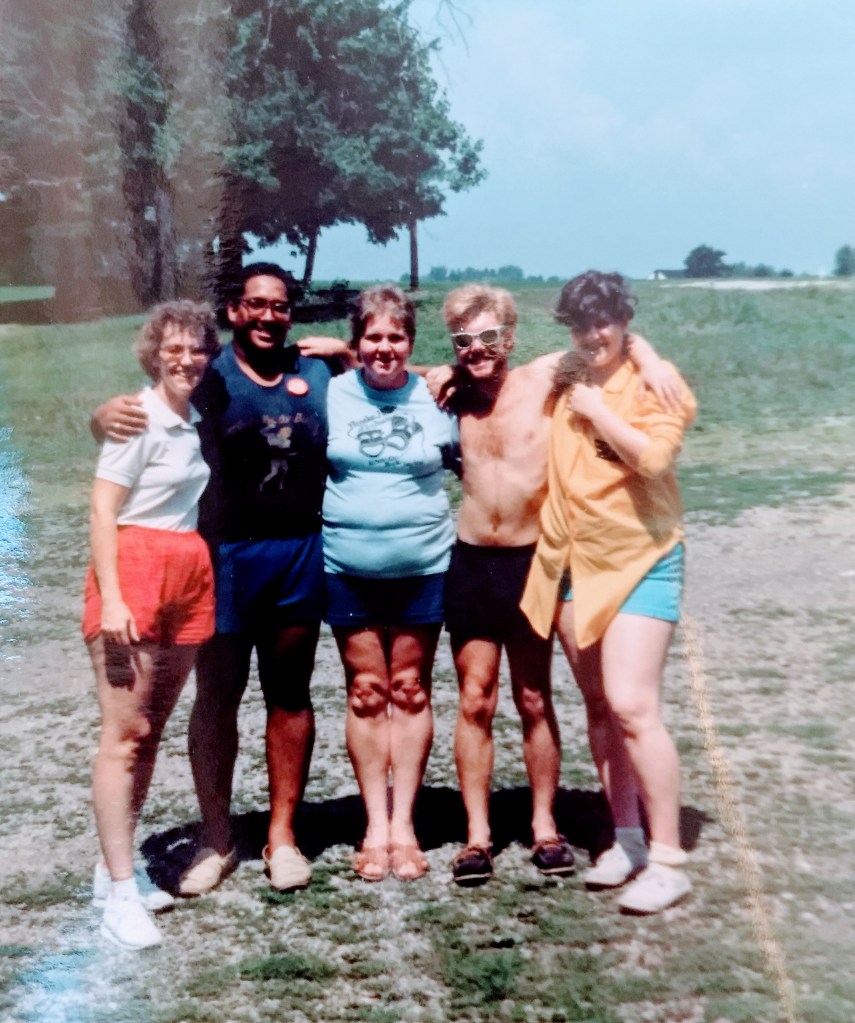
“The people I worked with both summers were great. And it’s a good thing because we lived together, too. It really was like having an extended family. We talked about everything and laughed at nearly everything. There weren’t any cliques, and I’m still in touch with so many of my Playhouse friends today, 40 years later!
“I didn’t have a driver’s license, so June Ramsey, who did a show or two with us, let me drive her car and practice driving. I also remember climbing over the fence at the park pool and going skinny dipping. It was a rite of passage!
“I loved it all, every minute, and I’d gladly do whatever needed to be done, from cleaning the restrooms to taking a curtain call. It was all just great.
“I loved when a show was over, and the cast went down to the lobby to meet people from the audience who had stayed around to pat us on the back or even give us a hug. I loved strike nights because there were always lots of people to carry furniture and scenery up and down the ramp.
“I liked it when you, Shari, or your Aunt Alice or Russ and Paula Welch would have us to your homes for a picnic or some such thing.
Most of all, I loved Al Martin. He showed us how to be a gentleman by his actions. I loved his fearless leadership on the volleyball court. And I remember how at 5:00 every afternoon, he’d stop what he was doing, put his tools and project away, and sit down with a Manhattan before dinner. That was so smooth. Oh, and I loved hearing his stories. He was a great storyteller.”
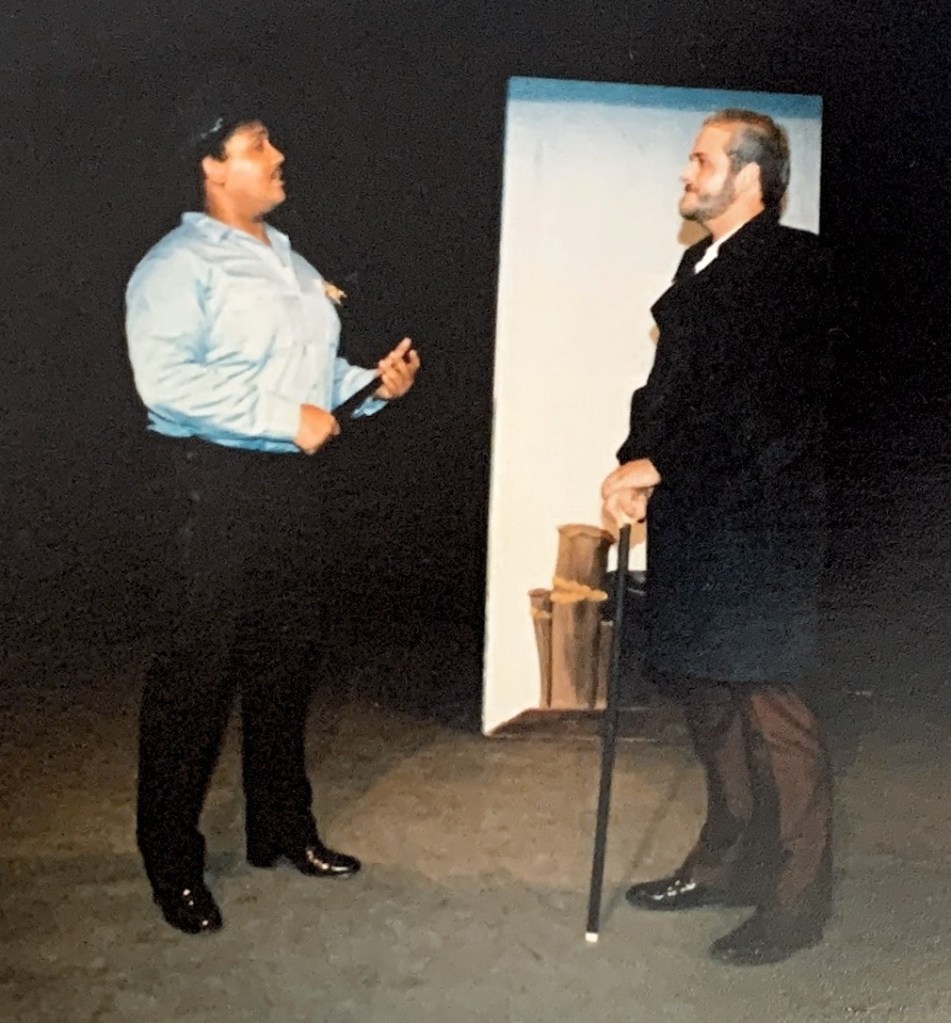
Smitty acted in three shows during his two summers: Fiddler on the Roof and Fools in 1985, and The Good Doctor in 1986. Of course, he built and painted scenery for all the shows, helped to gather props, worked scene shifts, ran lights, and stage-managed A Bedfull of Foreigners in addition to numerous odd jobs. Over the course of their summers together, Smitty and Tim Eckard became close friends, and they still keep in touch.
Right: Smitty and Tim Eckard in The Good Doctor, 1986
Smitty graduated from West Liberty in 1987 with a B.S. in Criminal Justice Administration, and Sheila graduated with her degree in teaching. Over the course of her career, Sheila taught middle school English, as well as second and fourth grades. And in 2001, Sheila and Smitty adopted 3-month-old twins—Elijah and Isiah.
“We were so blessed when the twins joined our family,” said Smitty. “The boys have brought us so much joy,” said Smitty, “even though they nearly ate us out of the house! They both grew and grew, were both outstanding high school football players, and at 6’4” and nearly 300 pounds, both went to college on football scholarships.”
Left: The twins on their 7th birthday
Smitty went on to get his master’s degree in criminal justice administration from Tiffin University and became a family-based therapist. Eventually, he also administered a college education program for prisoners through Belmont Tech. Maybe most incredible is his story as a diabetic. His diabetes became so bad that from 1999 to 2025, he was on insulin, but he lost 90 pounds and no longer requires insulin! He retired in 2025, right around the time the Smith “twin towers” graduated from college. Sheila retired in 2021, during COVID, but she continues to tutor a few times a week.
Today, Elijah works for Nationwide in annuities and Isiah works in the mayor’s office in East Cleveland (where Al Martin taught school and worked on shows at the East Cleveland Community Theatre for decades).
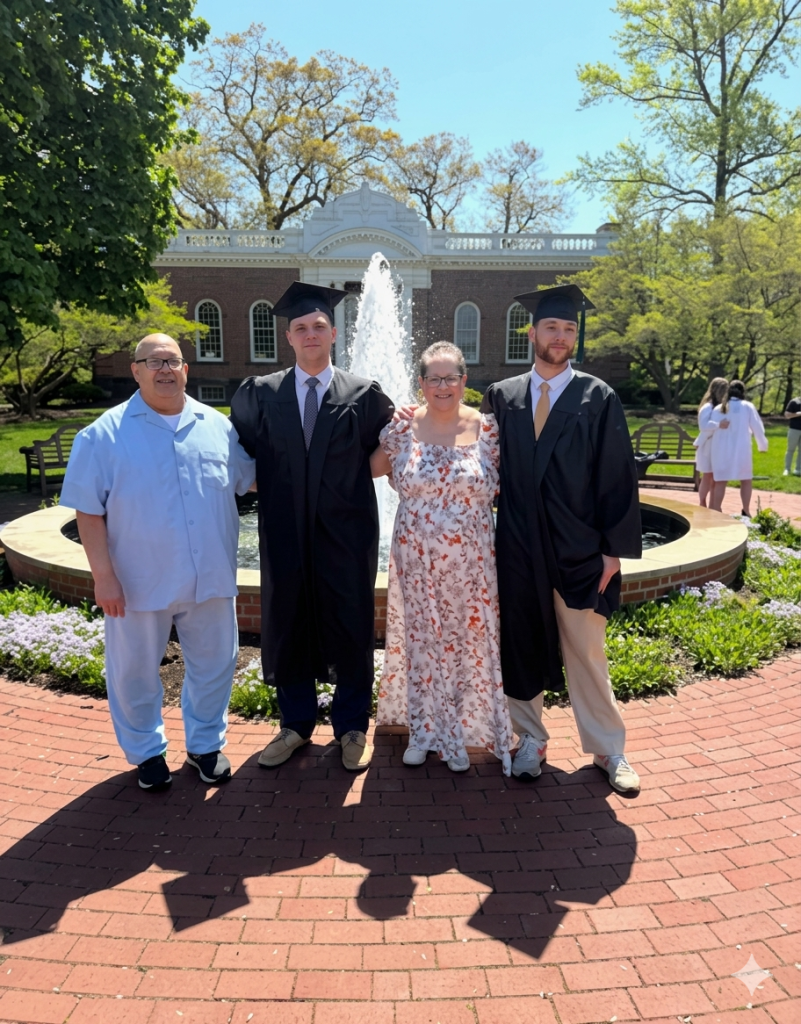
“Sheila and I now live in Columbus, Ohio,” said Smitty. “I have so many great memories of my time in the theatre. I might have to get back involved. I’m also looking forward to doing some traveling, and of course, just enjoying life.”

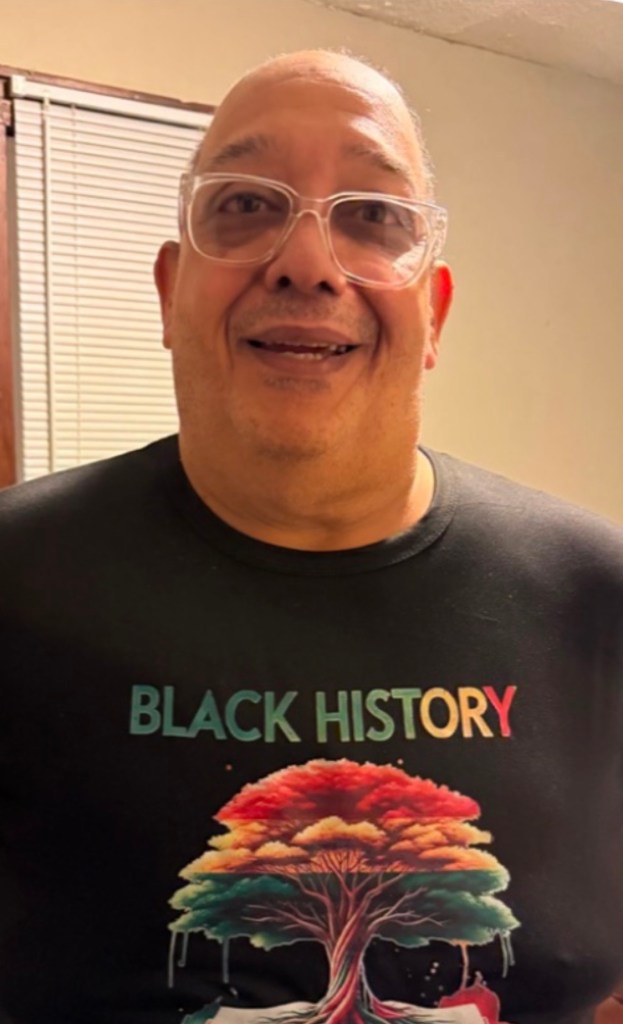
Following our chats for getting Smitty’s memory piece together, I received this sweet note from a sweet, lovely guy:
Shari, it was really nice to talk with you today. I just wanted to let you know you truly made a wonderful difference in my life. Brooke Hills Playhouse gave me a special place to call home and family. You have been an amazing beacon of light that continues to shine in so many lives.
Love you always,
Smitty
BEVERLY MASON (BRADY) KROMER REMEMBERS
Beverly Brady Kromer was a secretary for years at Hammond School. One day in early 1985, Bev and her friend from Hammond, teacher Loretta Edmundson, were at the Anchor Room in Follansbee.
Loretta said, “I just read somewhere there’s going to be auditions at the Brooke Hills Playhouse soon. Why don’t we try out?”
Bev said, “So we had a couple of drinks, and pretty soon, it started to sound like fun.”
Bev did show up for auditions, and she was cast as Shandel, one of the mamas, in Fiddler on the Roof. “I had so much fun,” Bev said. “I couldn’t wait to do another show.”
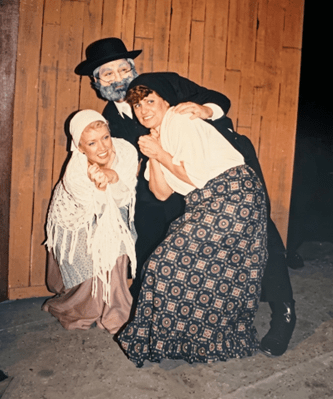
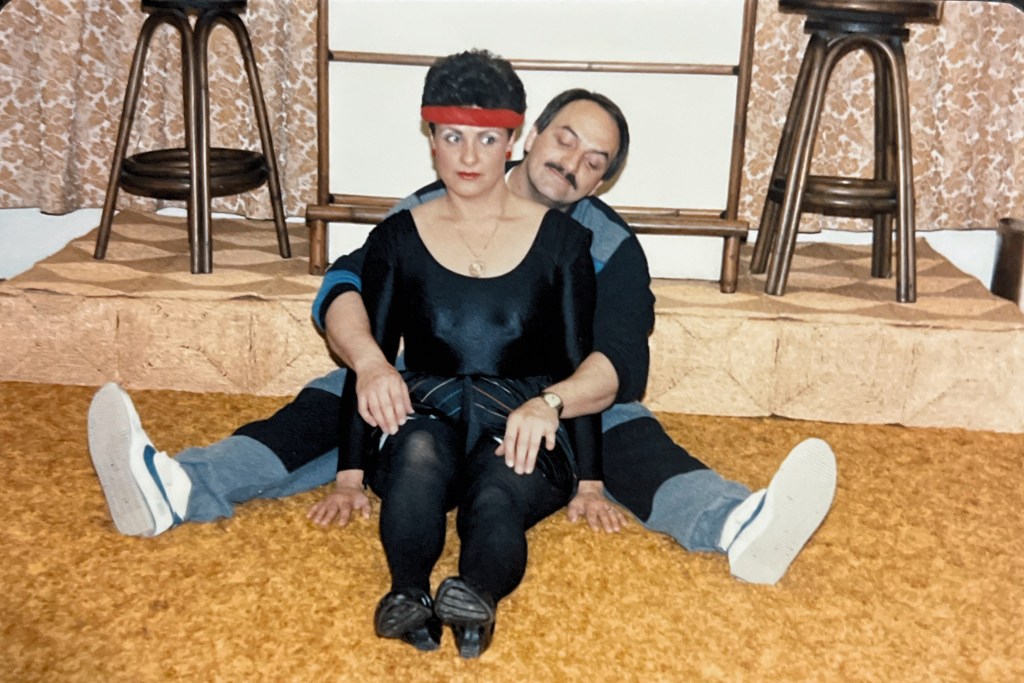
In the spring of 1986, the Playhouse held auditions for a dinner-theater show at the Brooke County Museum. The show, Twice Around the Park, consisted of two one-act plays, each with two characters. The first act dealt with loneliness. The second act featured Russ Welch and Bev playing a married couple in “A Need for Less Expertise.”
“It was pretty crazy,” said Bev. “After 26 years of marriage, we (our fictional couple) had grown apart, so we got this self-help audio tape that was supposed to improve our spiritual awareness, health, and sex life and then save our marriage. The show had lots of laughs, but the exercise parts were definitely the funniest!”
Later in May 1986, when the Playhouse held auditions, Bev was cast in both The Good Doctor by Neil Simon, based on the stories of Anton Chekov, and Speaking of Murder.
“The Good Doctor,” said Bev, “was directed by Al Martin. I remember him so well. He was always a gentleman, and he really loved everyone in the show. He would tell us where to move, and then he let us do ‘our thing.’ After rehearsal, during notes, he might have a little constructive criticism, but he was always kind.”
In the middle of that summer, Bev was cast as Mrs. Walworth in Speaking of Murder. Bev’s character was an eccentric, nosy woman who could have saved one of the murder victims in the upscale English country home where the play took place, but she didn’t. Consequently, she ends up being a victim herself. Fun stuff!
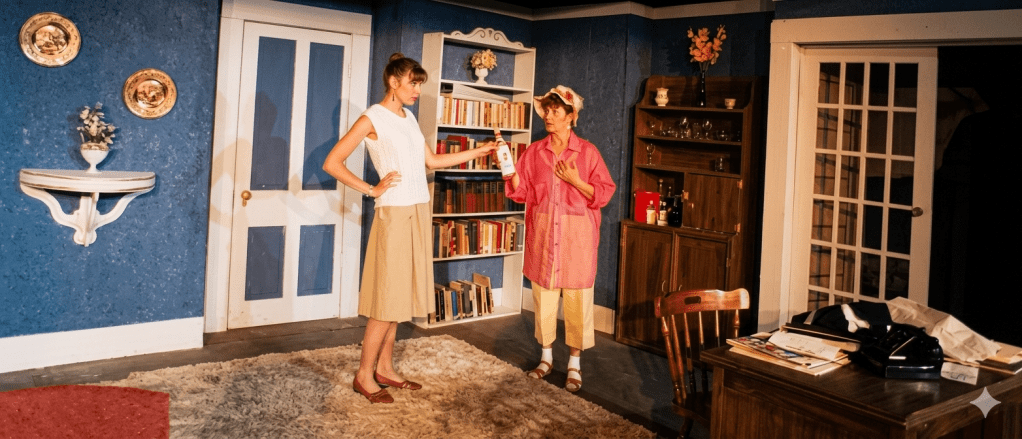
“Next was one of my dream roles,” said Bev. “In the 1987 summer, I played Florence Unger, the prissy one, in The New Female Odd Couple, opposite Sherry Ruschell, who played Olive Madison, the slob. Al Martin directed again, and the entire cast was top-shelf; every one of them was super talented: Jane Daugherty, Alice Wylie, Tammy Dixon, and Heather Vulgamore as the card players, Charlie Calabrese and Carl Marsh as the Costazuela brothers.
“I had more fun during the rehearsal period and the run of this show than any other time I can think of. I think our enjoyment on stage flowed right out into the audiences, who showed their appreciation with their loud applause and prolonged laughter each night of the run.
“Matz Malone, the reporter from the Steubenville Herald Star, agreed. I wish I’d kept a copy of that review because he really liked everything about the show, especially Sherry and me.
“Ralph Brady, my husband at the time, was so sweet. He saw the review before I did, and when I came home that night after the show, I found a big star he’d hung on our bedroom door!
“A couple of performances later, someone who had seen me in another show came up to me in the lobby after the show and said, ‘I read that you were in this play in the Observer-Reporter, and I had to come and see you!’ I’ve never forgotten that. I was pretty flattered.” [NOTE from Shari: The Observer-Reporter is the daily newspaper in Washington, Pennsylvania.]
In the spring of 1988, Bev may have been in another show at the museum, but no one can remember what the museum show was that spring. We have no record of the title. We just know that we did a show!
Sometime during the years that Bev was active at the barn (1985-1990), her husband, Ralph Brady, did us a huge favor at the end of one season. He ripped up the old stage floor, leveled it (again!), replaced any of the shaky supports, and put in a new stage floor. He also helped on quite a few strike nights. Ralph was a very good friend to the Playhouse, as he was handy with tools, and he just quietly went to work. There can sometimes be a little drama on strike nights. Never with Ralph. He just worked, and we appreciated it.
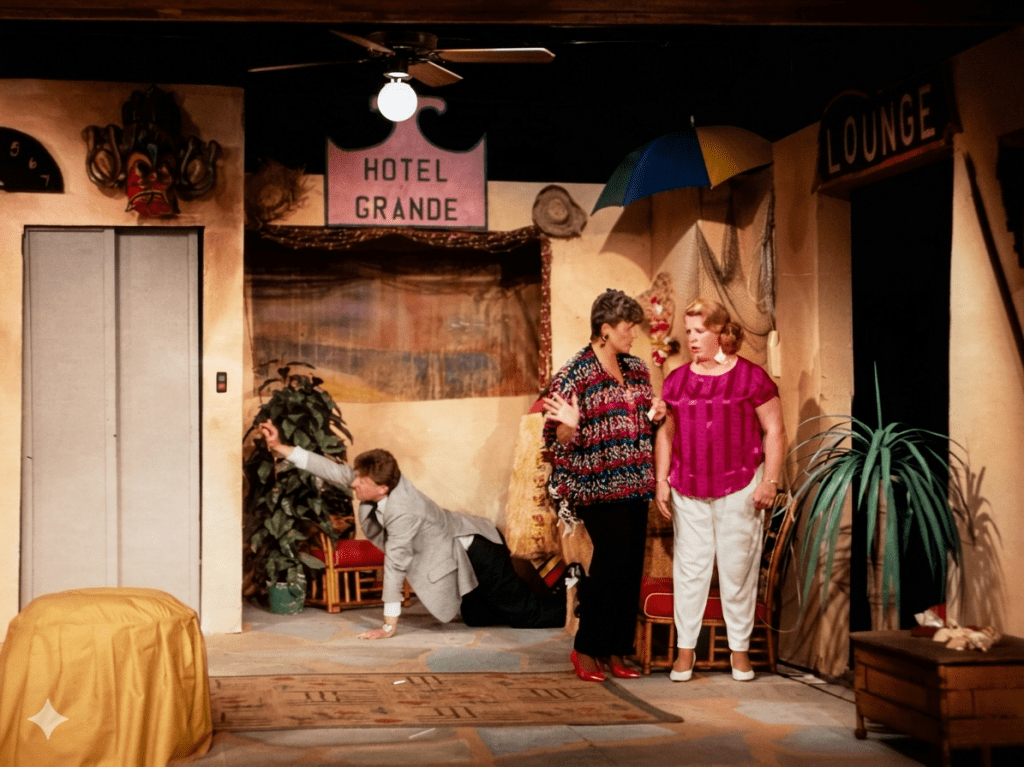
In 1989, we were presenting Bottoms Up!, an original farce by Gregg Kreutz. Gregg was also directing this very funny show that took place in a hotel on a Caribbean island. Bev played the proprietress of the hotel, Señora Valdez, who discovers there’s a suitcase full of money, probably ill-gotten gains, floating around and possibly up for grabs. The show went on to be published by Samuel French, the huge, worldwide play publisher, and Bev, along with the rest of the cast, and the Brooke Hills Playhouse, are credited in every script sold.
Bev’s last show at the Playhouse was a cute little comedy called Cheaters in 1990. The New York critics loved the show. “Downright hilarious!” screamed the New York Post, and “Welcome heights of hilarity!” proclaimed The New Yorker. With reviews like these, we had to do the show.
Bev’s last show at the Playhouse was a cute little comedy called Cheaters in 1990. The New York critics loved the show. “Downright hilarious!” screamed the New York Post, and “Welcome heights of hilarity!” proclaimed The New Yorker. With reviews like these, we had to do the show.
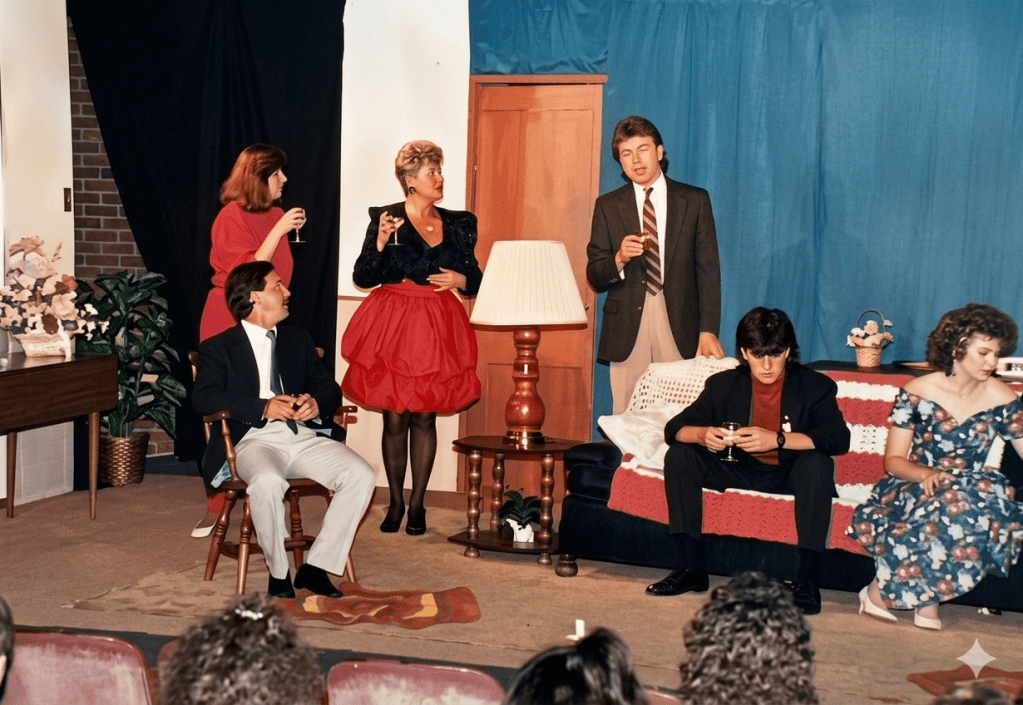
Standing: Diana Mendel, Bev Brady, Rick Call in Cheaters, 1990
In 2007, Bev ran into an old Follansbee High School classmate at Follansbee Days, and she remarried. Ken Kromer was a U.S. Marine and Vietnam veteran who went on to become a lawyer after his military service. Kenny and Bev were married for 10 years before he died in 2017.
Today, Bev is 82, has had knee and hip replacements, and lives on her own in Colliers, West Virginia. We hope to see her on July 18, 2026, at the Playhouse Alumni Reunion.
IN MEMORIUM
Troy Crummit was a member of the Playhouse for one season, 1985. As I try to locate former staffers and players, I go to Facebook or use Google. When I Googled Troy’s name, I learned that he had served in the U.S. Navy in a Heavy Artillery (HA) unit and died in 1994 at the age of 26.
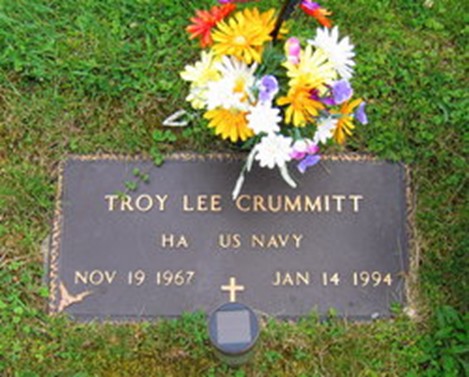
David “Smitty” Smith remembered Troy. “Troy was Bill Deerfield’s and my roommate in the small trailer. He was like our little brother. He was always very upbeat and friendly. He was a hardworking staffer. He would eat nonstop and wouldn’t gain a pound!! LOL!!! He was funny and very enthusiastic about being part of the crew. I remember how Troy hated volleyball but still loved playing with our crew! Troy truly was an amazing, talented young man. Troy would sing pop songs day and night. Troy and I both shared a common interest in Boy George & the Culture Club band. I truly believe he loved us all, and he called us his family from the park.
Bill Deerfield also remembered Troy: “I remember him as a good guy who was fun and had a big heart and a big laugh. He went all-in on volleyball.”
Sorry to say, I have few memories of Troy. He was a quirky, but happy kid with a great attitude. He was willing to try anything, but he hadn’t done much carpentry, so he was pretty awkward with tools at first. By midway through the season, he had definitely improved and looked more comfortable with a hammer and screwdriver, but I don’t think we ever let him near power tools. He was a good kid, and his death at such a young age is tragic. I wish I knew what happened.

 Life Without Lesson Plans