
by Shari Murphy Coote and Friends
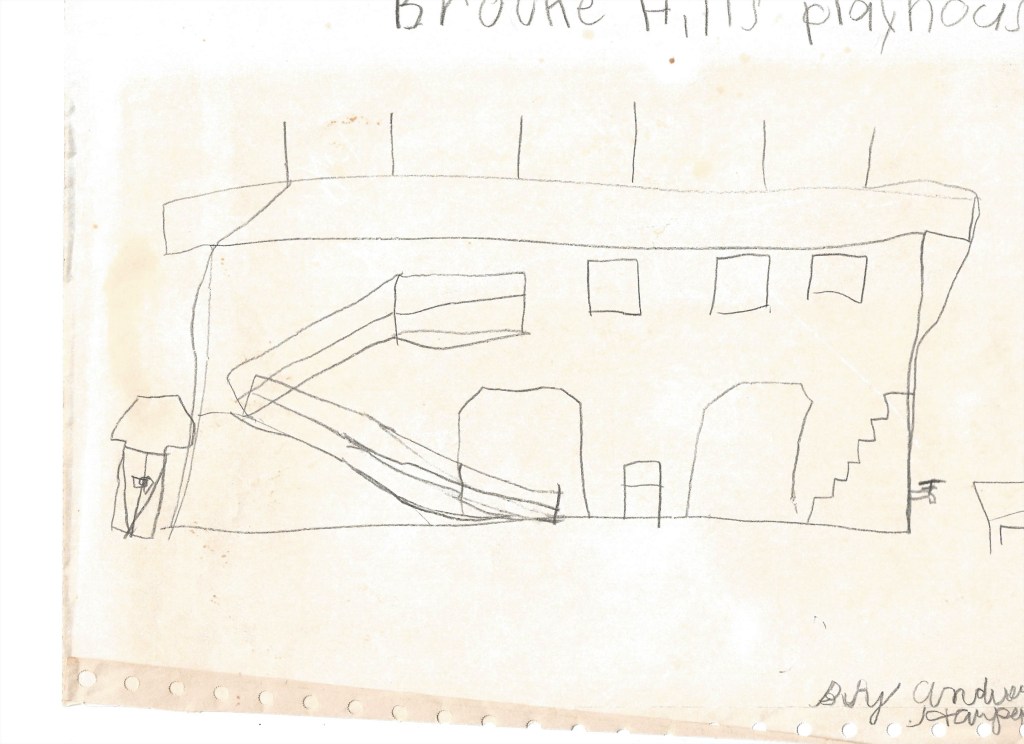
UNBELIEVABLE! WE MAKE IT TO SEASON FIFTEEN!
SHOWS AT THE MUSEUM CONTINUE TO PLEASE
We continued to make good use of the Brooke County Museum since remodeling the second story in early 1982. This April we produced a cute little show called Twice Around the Park that had two longish, one-act plays. On Broadway, the same two actors did both acts. We chose to use four of our stage veterans since the two acts were totally unrelated. Linda Huggins and Rick Taylor were in the first play, and Bev Mason (Brady) Kromer and Russ Welch were in the second.
Like every show we did at the museum, we had great audiences (of course, the museum seated about 1/3 as many people as the barn theatre) and made nice money to add to the pot needed for opening the Playhouse.
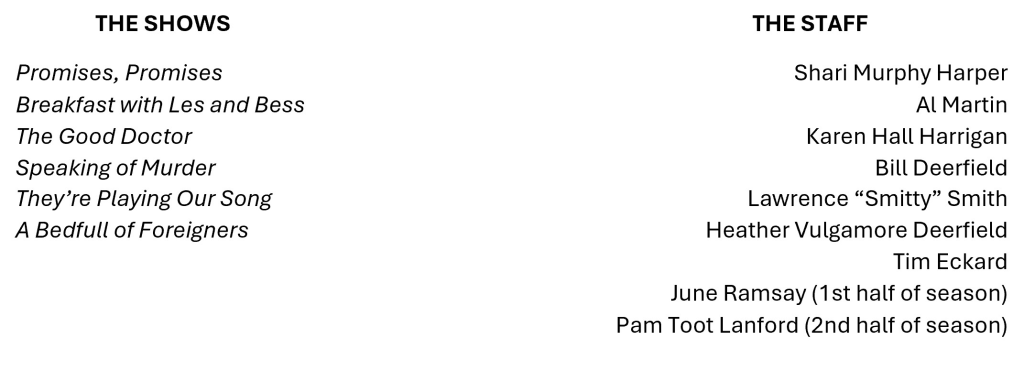
ANOTHER 6-SHOW SEASON AT THE BARN!
We should have named this The Season of Neil Simon, as he authored three of six shows in the line-up. Mr. Simon’s shows usually had high name recognition, but we chose three in 1986 that hadn’t been as popular as The Odd Couple, Barefoot in the Park, The Female Odd Couple, Come Blow Your Horn, and others. That’s not to say, it was a bad season. It wasn’t. We paid all of our bills and put some money in the bank. We just didn’t have any sellouts, something we always delighted in!
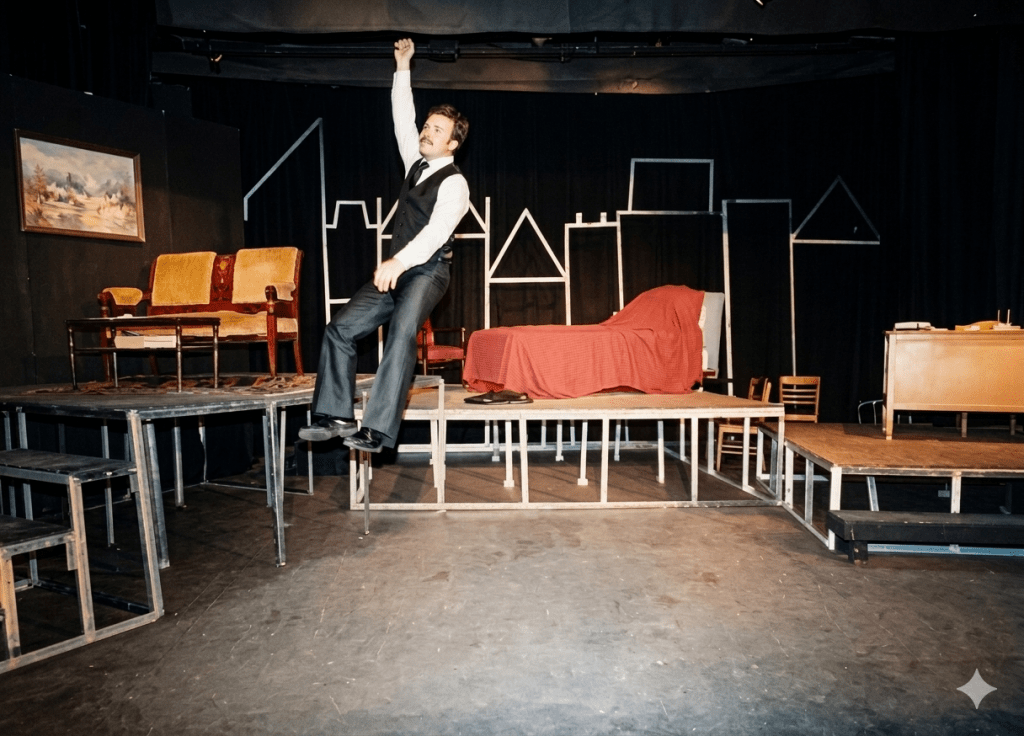
I’m not sure we made the best decision opening with Promises, Promises, as it didn’t have the name recognition of Fiddler, Annie Get Your Gun, Oliver, or Oklahoma! The book was byNeil Simon, the music by Burt Bacharach, and the lyrics by Hal David. Their names had been lighting up Boardway marquees for years. We had a talented cast, and the show did fine, just not sellout fine. I directed the show, and I was crazy about the set that Karen Hall and I had designed using angle iron.
Do you remember erector sets? Well, angle iron is like an erector set for adults, and that’s what we used to build the set. The pieces are bolted together, and we made frames for very strong platforms that were designated areas for various scenes. Because the office, living room, bedroom, restaurant/nightclub scenes all fit on various platforms, the scene changes were minimal. The play took place in New York City, and we built the silhouette of a city skyline out of angle iron for the backdrop as well.
Sad to say, I don’t remember much about the second show titled Breakfast with Les and Bess. I googled the title and that helped a little. The show is about a couple described as lousy parents, lousy lovers, but engaging radio hosts, who broadcast a live, call-in, radio show from their New York City apartment each weekday morning. I do remember that Sippy Hayman from Steubenville was in the show. This may have been the first of several shows she did at the Playhouse. More about Sippy later. So far, we haven’t found any photos or cast lists from the show, but Tim Eckhard, one of our staff members, tells his memory of the show in his memory section.
The Good Doctor is a gentle comedy by Neil Simon comprised of 10 “playlets” based on the stories of Anton Chekov. Although the show can be done with as little as 5 actors, Director and Designer Al Martin decided to spread the parts among 15 cast members, and I think they would all tell you they liked creating their character or characters, enjoyed their small line load, and loved the audiences’ laughter and sympathetic reactions. Since there were 10 different settings, Al painted one flat for each scene and added a piece of furniture or two for quick, easy shifts from one scene to another. Genius!
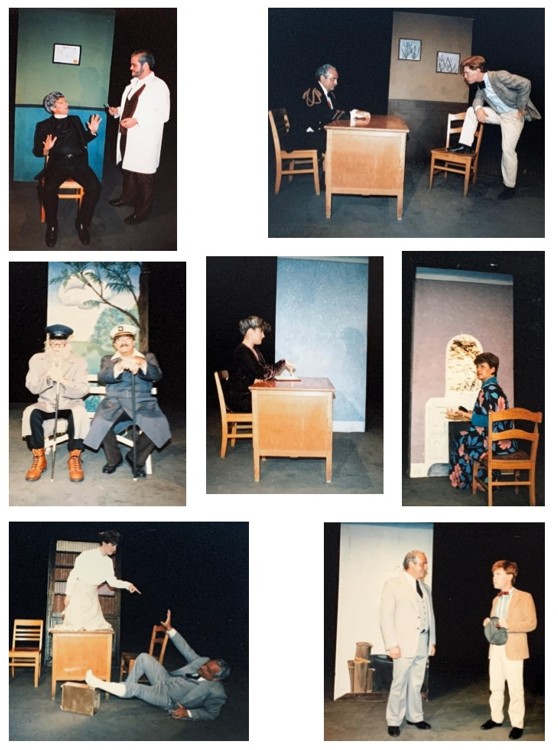
in The Good Doctor.
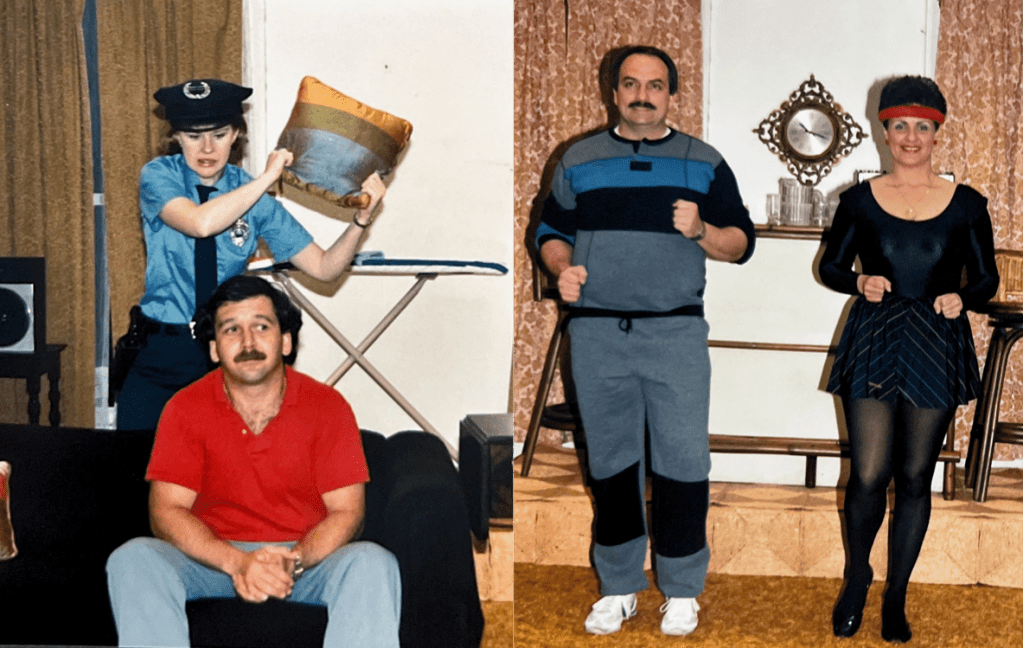
Occasionally, we would produce a mystery, and we did Speaking of Murder this season. Although the mysteries were never as well attended as the musicals or the comedies, they did give our “hardly-ever-missed-a-production,” loyal, season coupon holders and our actors a change of pace. We have photos from the show but no cast list, and I’ve forgotten the names of most of the actors, including the little girl and young boy in the show.
The second musical of the season, They’re Playing Our Song, was based on the real-life relationship between methodical, wise-cracking composer Marvin Hamlish and unorganized lyricist Carole Bayer Sager. All the music was written by that duo, and the book for the show was written by Neil Simon. The show has two characters, but it requires 8 actors, because the Hamlish and the Sager character each have three alter egos, who often say what the actual characters will not. The alter egos, in essence the chorus, also provide much of the humor, as in what the characters are really thinking, along with singing and dancing. Sad to say no photos or cast list have been located for our production.
A Bedfull of Foreigners, a perfectly crazy British farce (hence the spelling “bedfull”), wrapped up the season. As with so many farces, the story is so convoluted, that writing it out would take numerous paragraphs. I think that I remember that the show ran for two weekends, and the audiences got larger with each performance as word of mouth spread. Again, some people in the audience could be heard trying to warn a character onstage that “so and so is in the closet” or “oh, no, he doesn’t know she’s looking for him.” Those shows which literally suck in the audience are such fun for the cast, but if someone in the house is too loud, it can sometimes be a little off-putting for the people onstage! Bedfull was a great, strong way to end the season.
HEATHER VULGAMORE DEERFIELD REMEMBERS
Heather Vulgamore was a talented student who, with her incredible voice, was involved with the music and drama programs at Brooke High School. She was in the Gilbert and Sullivan operetta, Patience, her freshman year, was a member of the concert choir and the Madrigal Choir and performed in the first and second Madrigal Feasts.
Heather grew up in Bethany with her three, also talented siblings, and she started working at the Playhouse when she graduated from high school in 1986. I’ve been trying to think of something that Heather couldn’t do, but in truth, she could do it all–sing, act, build and paint scenery, stage manage, run lights and props, work on costumes. And run the box office.
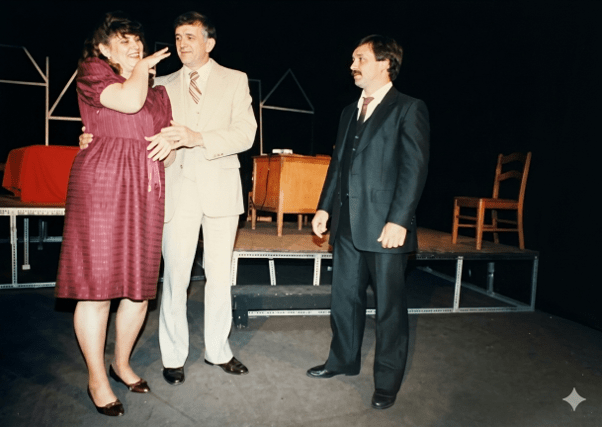
Actually, Heather could run the theatre, and she did. One summer I ended up in the hospital for ten days with some sort of viral infection that was never diagnosed. I never had a worry. Heather stepped right in, and the shows went on as scheduled. I still call her “My daughter by another mother,” and I always hoped that one day she would take over the management of the Playhouse. More on this later.
At Wittenberg University, Heather majored in music education, and her voice got even stronger. Honestly, she could shake the barn rafters! When she graduated from Wittenberg in 1990, she worked at the Playhouse that summer and applied for teaching positions in the states all around us. She got an interview on a Friday morning in Princess Anne, Maryland, 430+ miles (7-hour drive) from the barn, way south of Washington, D.C. near Chesapeake Bay. We were all excited for her, but she didn’t have a way to get there, AND she was in a show! What to do?
I arranged for son Andrew to stay with Mom. Heather did the show on Thursday night, and following the curtain call at about 10:30 p.m., she and I jumped into my car and started driving. We drove all night and got to the place with about 90 minutes to spare. After a night in the car, however, Heather needed a place to change clothes and freshen up.
We drove around for a while, and I spotted a church with a house beside it. The brick on the house matched the brick on the church, so I assumed (correctly) that the house was that of the pastor. I went up to the door and knocked. A nice, but very skeptical Black woman answered the door, and I started talking–we’d driven all night, Heather had an interview, she needed to freshen up and do her hair, could she please use their facilities?
The woman called her husband, the pastor, to the door, and I said, “My mom always said if I was in trouble, I should go to a church. I’m not in trouble, but I do have a need,” and I gave him the spiel. He went and got the keys to the church and told us we could use the restroom. I can’t remember if there was a shower or not, but Heather was able to wash, do her hair, and put on make-up.
We returned the keys, thanked the pastor and his wife profusely, and drove over to the board of education. Heather had her interview, and we jumped back into the car and headed home, arriving in time for Heather to get into costume and make-up and do the Friday night show! The next day or so, I sent a check and a thank-you note to the helpful pastor.
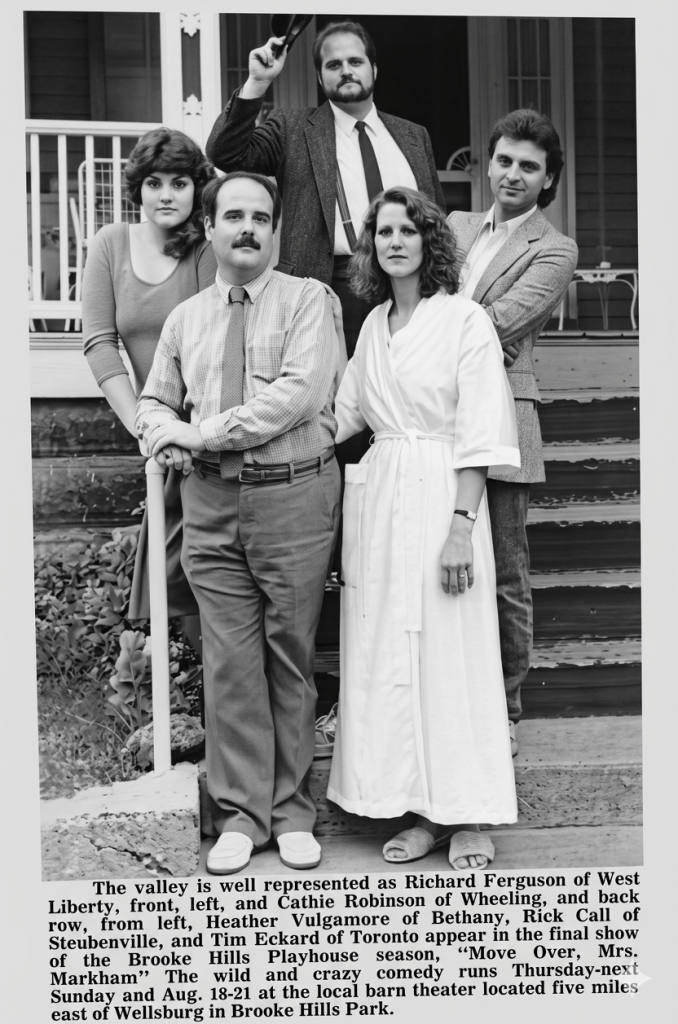
Move Over, Mrs. Markham, 1988
“While I was waiting to hear from Princess Anne,” said Heather, “I got a chance to interview in Frederick, Maryland. This time the interview was on a dark day at the Playhouse, so we loaded up Shari’s old station wagon with Cathy Brooks (another staff member), my sister Erin and brother Jay Keener, Shari’s son Andrew, Shari, and me. We drove to the interview place which was close to Hershey, Pennsylvania, and spent the night in a motel—all of us in one room! After the interview, we spent the day at Hershey Park before driving home. We laughed and sang all the way there and back!”
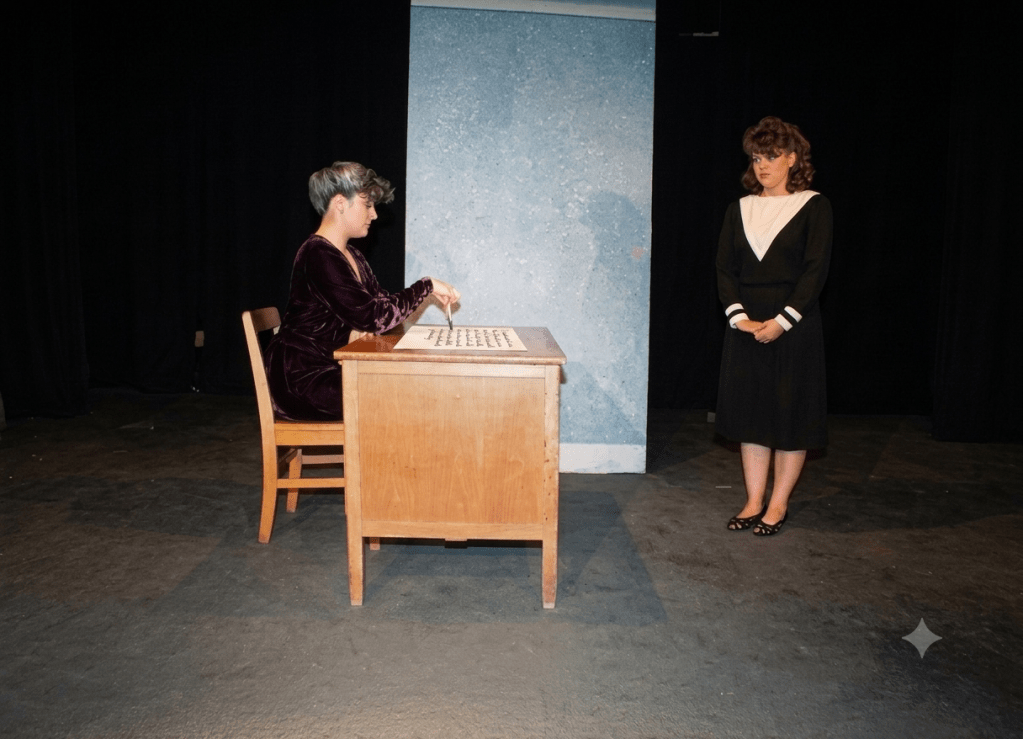
Heather didn’t hear from Frederick, but she was hired by the Princess Anne district for a teaching job in Crisfield, Maryland. Much to my relief, she continued working in the summer at the Playhouse. Eventually, Frederick, Maryland called her, based on her application from two years before! Heather began teaching in Frederick in the fall of 1992.
There are many “Heather Stories.” When we did The Foreigner in 1987, Heather was the stage manager. The day of dress rehearsal, Diana Mendel, who was playing the proprietor of the hunting lodge, fell at home and sprained her wrist. It was a very painful sprain, and she was given pain killers, something not conducive to reciting lines under hot lights.
Heather jumped right in and went on in Diana’s place with the book in hand that night, and again, as had happened when Russ Welch went on with the script, the audience was very accepting. At intermission, one person said, “I didn’t even notice the book in her hand after about two minutes.” Another person said to one of our staff members, “I thought someone was supposed to be carrying the script.” Honestly, audiences are amazing. They always root for things to go well, and if the show is well-acted and directed, audiences just go with the flow!
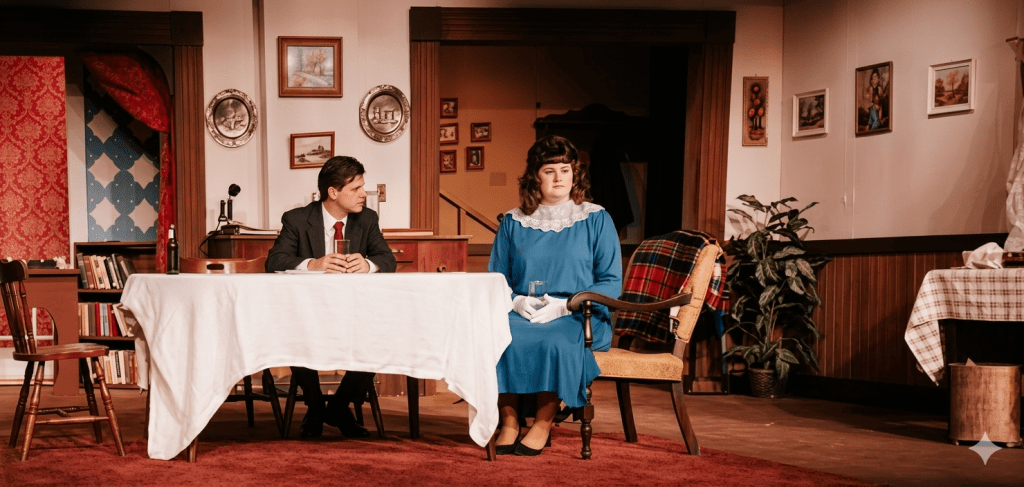
Heather was the reason we re-evaluated our pay scale again. Like so many others, she started at $25 a week plus room and board and a $25 a week bonus for staying until after the final strike night. We had eliminated the “all-the-beer-you-can-drink” clause after the first couple of seasons. The bonus ($325, 13-weeks of employment times $25-a-week bonus) ensured that staff members had something to show for working so hard all summer.
When Heather returned for a third season, we upped her salary by $25 a week, and we upped it another $25 until she reached the princely sum of $150 a week! We capped it at $150, or we would have gone under!
Heather thinks she acted in 18 shows, crewed 15, and directed 1, showing how quickly one can build a resume while working summer stock. I think her count is probably on the low side. Heather said, “I have so many favorite shows, but acting and singing in Pump Boys & Dinettes, Nunsense, and Sgt. Fenshaw of the Mounties are my top three. Pump Boys and Nunsense are just great ensemble shows. You really have an opportunity to work and gel as a team. The Return of Sgt. Fenshaw is also fun, but the first Fenshaw was just a hoot! The people in the cast really made it so much fun on and off stage and performing a melodrama with audience participation was such a unique experience.”
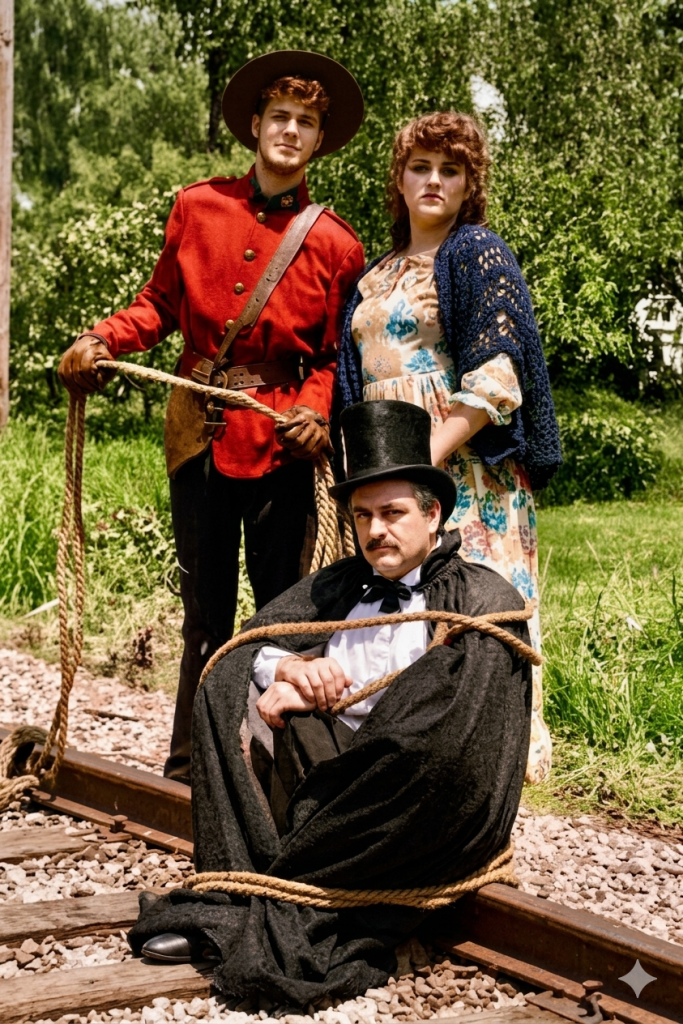
Heather said she had seven seasons’ worth of great Playhouse memories. Some of you will relate to a few of them.
Heather wrote, “I don’t know where to begin. I met my forever husband, and my first husband, at the Playhouse! I loved our many great late-night parties, strike nights, and sing-a-longs. We all loved playing volleyball after lunch and dinner with Al Martin. I loved it when my little sister Erin came out to the Playhouse to help. Al jokingly established a ‘no giggling during volleyball’ rule because Erin would giggle during the games. He did it to tease her, which would make her giggle even more. Then I loved being at the Playhouse even more when my other sister Emily and my brother Jay started being in shows.
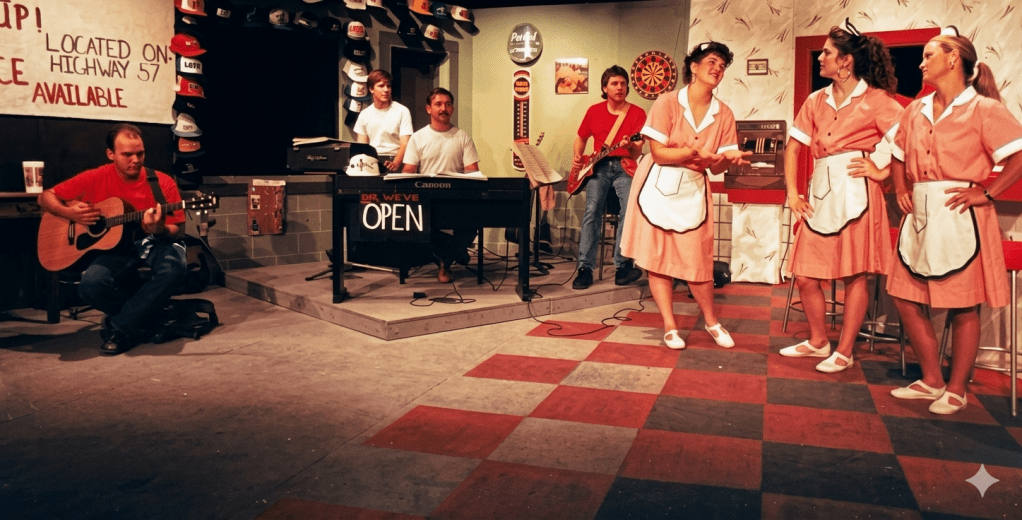
“If we played volleyball too long—usually because Al wanted to keep playing—we would scatter like ants when we heard Shari’s station wagon flying down the dirt driveway. Everyone grabbed a broom, paintbrush, toilet brush, or some such thing, and got to work!
“My other memories include Al’s daily 5:00 p.m. Manhattan,” said Heather, “and Paula cooking in the kitchen—we never knew what! Then there was Paula’s crazy ‘honk-like sound’ if we made her laugh really hard. Everyone at the Playhouse over my seven summers tried their best to get Paula to honk! It would be the highlight of our week, and of course, made us all laugh like crazy!
“If you’re involved in theatre, you usually spend the majority of your time rehearsing and putting on shows in places with no windows. It’s all artificial light with no fresh air. At the Playhouse, our casts rehearse outside in the yard or the nearby picnic shelter with plenty of sunshine (okay, occasionally it does rain) and plenty of fresh air. Hardly any theatres have windows. At the Playhouse we open the windows upstairs first thing in the morning and close them when the show is over!
“Some evenings following the curtain call, the crew and often some cast members would head down the road to the Drover’s Inn. I remember eating wings and hanging out there after a show. Sometimes audience members would be there, and they would come to our table and compliment us. A few times, they bought our table a pitcher or two of beer!
“During my seven Playhouse summers, I slept in a variety of places. Over that span, our crews lived in the yellow house (the farmhouse by the barn), travel trailers, a mobile home, and for a couple of summers, I lived by myself in the ‘Heather Shed.’ [NOTE from Shari: We bought that shed from the construction class at Brooke High for storage, and as soon as it arrived, Heather claimed it for her living space!] Then, too, I learned so much from Shari about everything from building sets to running a theatre, and I met so many amazing people. I loved it all!”
Heather’s final Playhouse summer as a staff member was 1992, following a seven-season run! She played the lead in Our Miss Brooks and a bit part as a cop in Rumors. Ironically, in all those years, Heather was only in one opening musical, Promises, Promises in 1986. In the following years, her college let out too late for her to make auditions and the first rehearsals, and the same went for those years when she was teaching in Maryland.
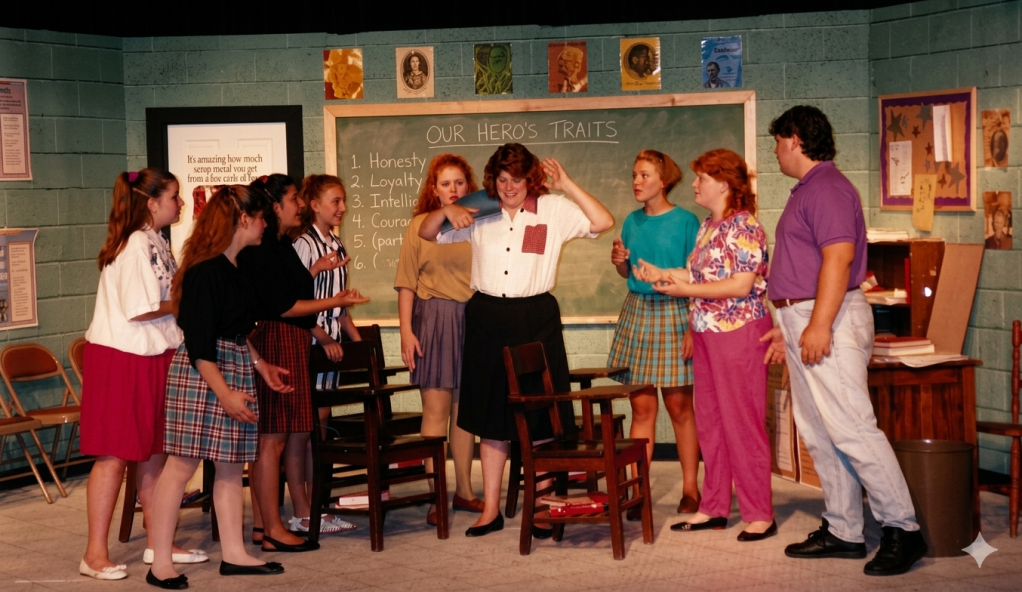
I am guessing that if you ask Heather which season was her favorite, she might say, “My first summer, 1986.” Her answer wouldn’t have anything to do with the shows, the living accommodations, the food, or the weather. 1986 is the summer that she met Bill Deerfield, who was on the staff for his second summer.
Bill was another guy who could do it all. Like Heather, he was a fine actor with carpentry skills and a hard-work ethic. Bill, a native of Weirton, W. Va., started working at the Playhouse in 1985, following his junior year at West Liberty State College where he was majoring in psychology and minoring in theatre. Bill returned to the Playhouse the following summer, just as Heather arrived for her first season. It wasn’t long before the two of them became “an item.” It was inevitable.
Both were talented, bright, fun-loving, respectful of each other, and could talk with each other for hours. That fall, Bill enlisted in the U.S. Army, and eventually, he was sent to Korea. The distance took its toll. Heather and Bill broke up about 7 months after Bill returned from Korea, and they were still living far apart. [NOTE from Shari: You can read Bill’s story in Part 24 of this memoir.]
Fortunately, Heather and Bill became reacquainted in 2010, and after doing the long-distance thing again, she packed up her belongings and her cats and moved to El Cajon, California to be near Bill.
Bill was teaching high school drama and directing plays and musicals at his school. Heather was the Life Enrichment Director at Fredericka Manor Retirement Community. The two of them soon started volunteering at the Pickwick Players Community Theatre in nearby Santee, California, with Heather appearing on stage and Bill directing.
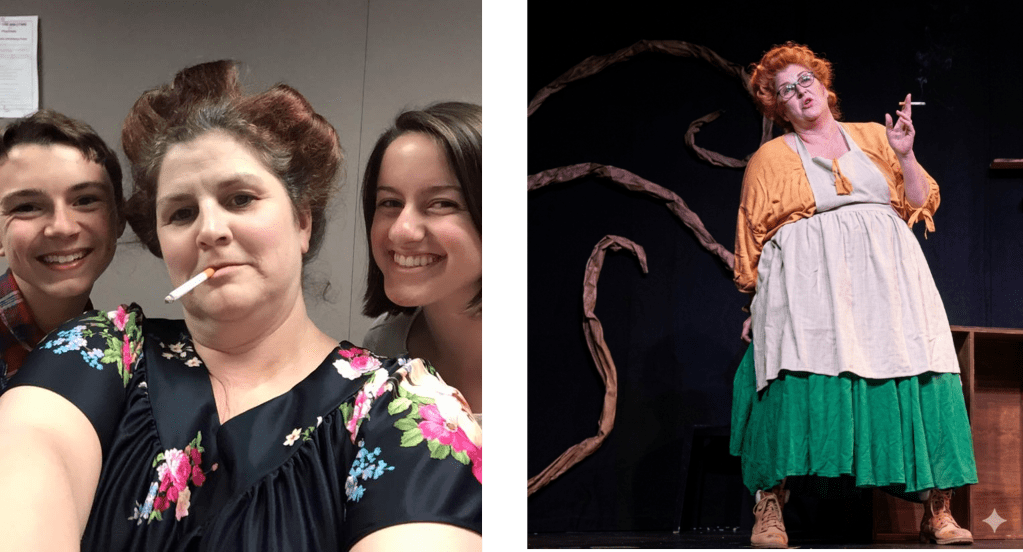
Bill and Heather married in 2015, continued working and doing some shows. Following Bill’s retirement in 2023, the couple bought a house in Weirton and moved back to the Ohio Valley. Heather is the Executive Director at Prime Time Adult Care in Bethel Park, Pennsylvania.
In 2024, Heather appeared in two Playhouse shows, Kitchen Witches and Matilda, and in 2025, she appeared in three Playhouse productions: Steel Magnolias, 9 to 5 the Musical, and Always a Bridesmaid, which Bill directed.
In 2025, Heather joined the board of the Brooke County Arts Council, the nonprofit established in 1982 to oversee the activities at the Playhouse. In 2026, she was elected board President. As the 55th season gets underway now in 2026, Heather is acting in the opening show, which Bill is directing, and she will be acting and singing in the second!
A FAVORITE THING
by Cathy Gaines Melvin
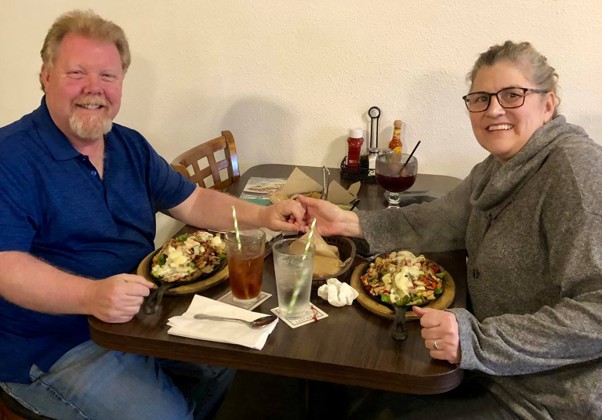
Memories are wonderful things. Sometimes Playhouse alumni read this memoir, and a memory of their time at the barn comes flooding back. Sometimes just seeing something dredges up long-forgotten memory.
I recently received an email from Cathy Gaines Melvins, a staffer during the 1980 and 1981 seasons.
“Shari, I was thinking about Brooke Hills Playhouse yesterday when I was trying to figure out where to put a spare nail (16d*, actually),” wrote Cathy. “Anyway, I remember the sorting system for nails and screws in the Playhouse toolroom. Each of the different sizes had a large steel can that had once had vegetables in it. 16d nails might have been referred to as ‘green beans.’ It made me smile to remember!”


That was something that I didn’t remember, but the various staffs often had in-jokes. We were feeding 8-12 people three times a day, so there were a lot of big #10 cans around for storing nails, mixing small batches of paint, and numerous other odd jobs.
I remember that one of the stage sets needed something to dress (stage talk for “decorate”) an upstage corner. I took a #10 can, sprayed it black, wrapped it with thick sisal rope, filled the bottom with gravel from the parking lot, stuck a large green, realistic-looking, plastic plant in it, and set it on a small table. It looked great, and it amassed quite an impressive resume as it adorned many sets over the years!
Those #10 cans often came in handy.
*16d was a 16-penny nail used mostly for nailing 2” x 4”s.
In case you can’t read the size. This can contained 101 oz. (6.3 lbs.) of green beans! It’s probably big enough to hold 25 pounds of nails!
TIM ECKARD REMEMBERS
Tim Eckhard was perfectly prepared for being on the Playhouse staff, as he was raised in a theatre family. His dad and mom, Mary and Jim, along with Sippy Hayman (a Playhouse stage favorite for years), Dom D’Aurora, and others had founded the Steubenville Players. Tim had been in Steubenville Players’ shows as a young kid and in plays and musicals all four years at Toronto High School (Paint Your Wagon, Bye Bye Birdie, Arsenic and Old Lace, The Wizard of Oz, and some he’s forgotten). Tim had always worked on building the sets as well.
Two of his schoolmates, Cassie and Gene Van Dyke, told Tim about the Brooke Hills Playhouse, and he auditioned along with the Van Dykes during the 1985 season. He was cast in Fiddler on the Roof along with his two friends. For the rest of the summer, he volunteered at the barn, building and painting scenery, working on backstage crews, and always staying for strike nights.
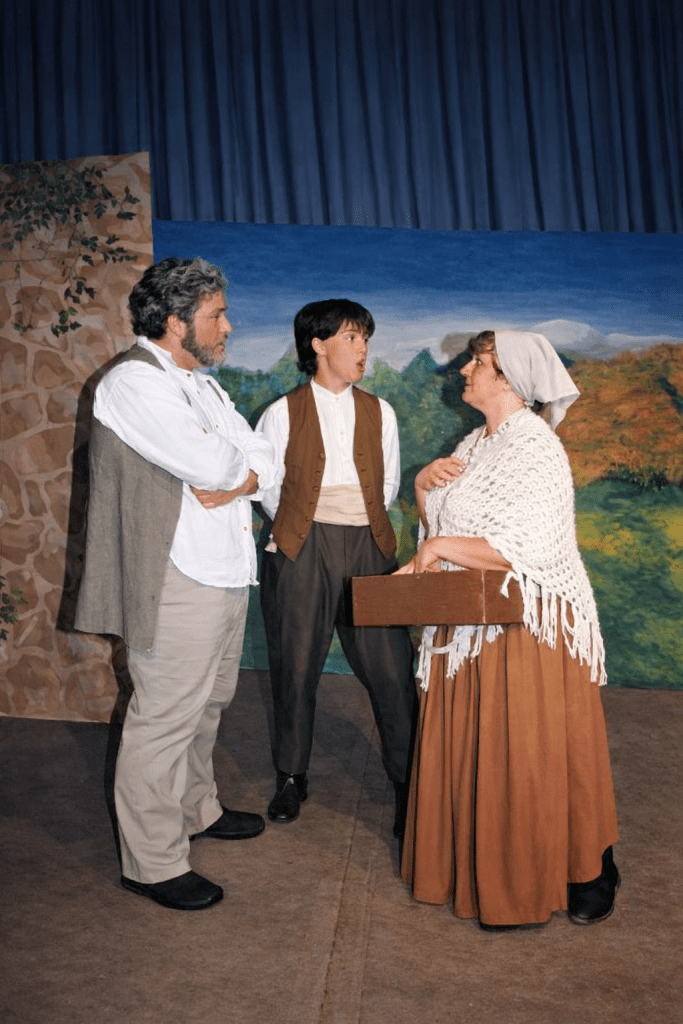
Tim’s first show at the Playhouse.
In 1986, Tim applied to be on the Playhouse staff, and he joined the crew following his high school graduation that spring. “My first acting role that summer was in a little comedy called Breakfast with Les and Bess. I wasn’t cast in the show. I just fell into a role. The leads, Bess and Les, were played by Sippy and Milt Hayman, whom I had known almost since birth! Unfortunately, Milt was having real problems with his lines, and he decided he needed to back out for the good of the show. Russ Welch stepped up and took over the role. Then, a week or so before opening, the guy playing Les and Bess’s daughter’s husband had a death in the family, and I was given the part, “drafted,” I guess you’d say.
“I had plenty of time to learn the lines (there weren’t many). I would show up with the daughter of the title couple, my wife in the show, a few times, say my lines, and leave. It all worked out. “Ken Kasprzak played the narrator in The Good Doctor, a series of short scenes based on the stories of Chekov. Ken had a huge number of lines. The rest of us in the show each played two to four characters in the nine relatively short scenes. I played three different characters, and it was a very witty show, directed by Al Martin.”
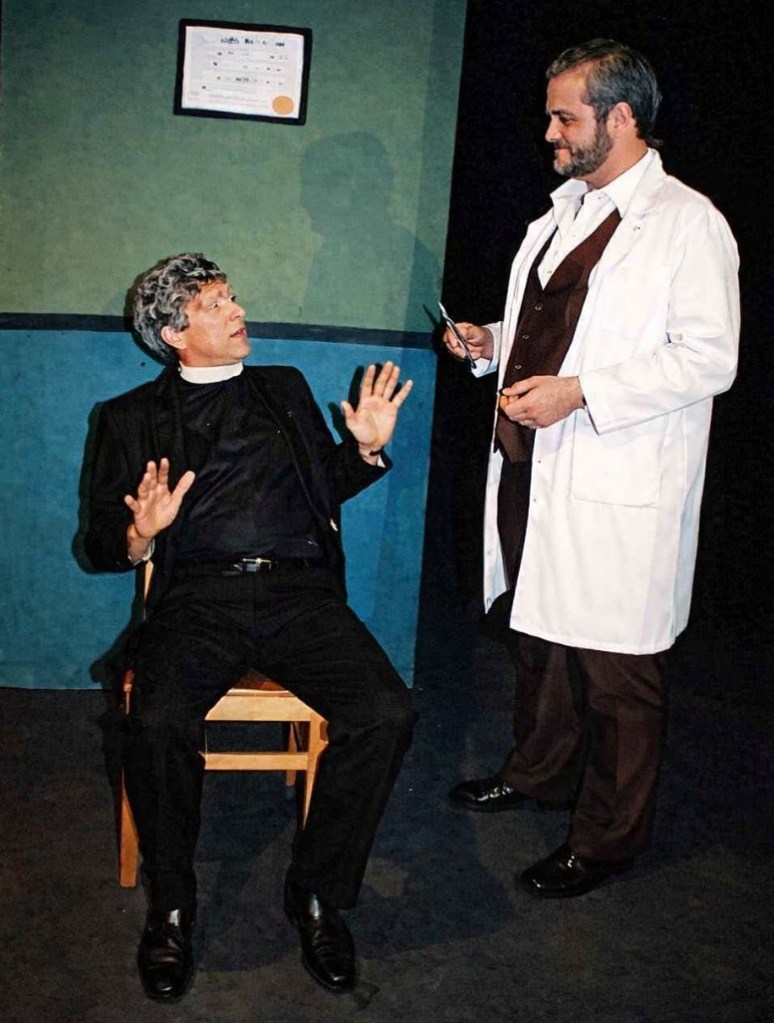
The Good Doctor, 1986
Tim was also in the final show of the season, his fourth for the summer. It was a really funny show called A Bedfull of Foreigners, a farce with wild characters that took place in a small French hotel near the German border during a local festival. The characters all ended up chasing through the hotel room of a nice, staid English couple, making them wish they had stayed at home.
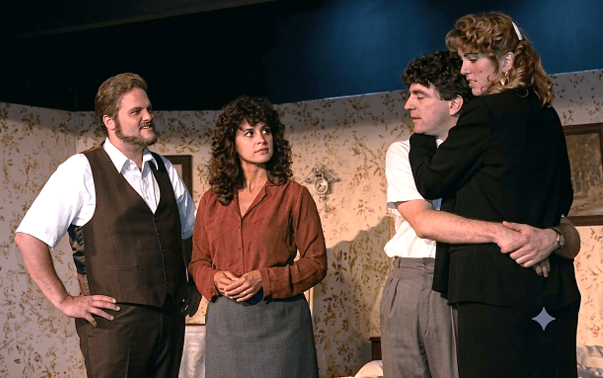
“One of my vivid memories from that summer concerned beds. Every show that season called for a bed on stage. While some of us were sleeping in travel trailers, one couple often slept on stage with the bat, where it was probably a little cooler!” [NOTE FROM SHARI: More on the bat later.]
Tim joined us again for the 1987 season, after his first year as a Communications/Theatre Major at Heidelberg College in Tiffin, Ohio. Tim was in four shows in college, and he received a stipend for set building and tech work. With his extra credits, we were happy to have him back.
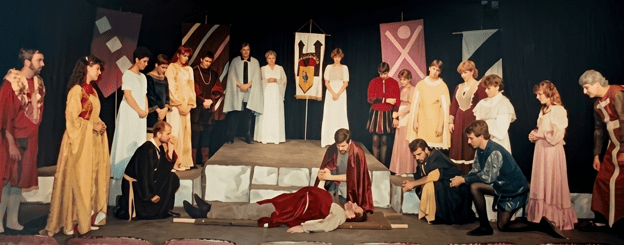
In Camelot, the first show of the season, Tim played Sir Lionel, one of King Arthur’s most loyal knights. In the show, and thankfully offstage, Sir Lionel is mortally wounded while jousting with Sir Lancelot. His body is carried onstage by six knights to be prayed over. Tim vividly remembers one night:
“We had made a stretcher of two solid 2”x4”s for siderails with their ends whittled down to make handles and another whittled place in the middle for a hand hold. An old army blanket was doubled over and stapled over the 2”x4”s to create the sling for me to be carried on from the porch at the top of the ramp each evening. From there, it was up two steps and onto the stage.
“One evening, the stretcher started collapsing, with the blanket being ripped from the siderails. The stretcher bearers quickly recovered, with one of them grabbing my head. Instead of going up onto the stage, the guys stood holding me, albeit awkwardly, in front of the stage. The cast moved to the front of the stage. I did my best to look lifeless while being held precariously, knowing those guys were trying their best to hold me aloft during an ultraquick prayer. Fortunately, the prayer was followed by a quick blackout!”
After running the lightboard for the second and third shows, Tim had a role in The Foreigner, a very funny play that revolves around a shy Englishman who just wants to be left alone. To achieve that end, his friend suggests that he could pretend to be from an obscure foreign country where an intricate and unique language is spoken.
“I played a redneck,” said Tim. “I sweat anyway, but OMG, I had to wear a thermal shirt topped by a flannel shirt! Under the stage lights on those hot August evenings, I was practically swimming on stage.”
He rounded out the season playing the lead, a mechanic, in the comedy Nuts, Bolts, and Carnations. The laughs begin when Cliff, Tim’s character, receives a large bouquet of flowers from his wife at work, the service area of a garage. Cliff is a guy’s guy, and he doesn’t appreciate his wife’s gesture. The entire cast got a great review, and the audience got a lot of laughs. For me, the funny thing was that Tim didn’t remember the show, the plot, or his part in it! We have no photos or cast list from the show, but fortunately, Rick Call, also in the cast (along with Peggy Barki, Heather Vulgamore Deerfield, and Kim Pratt), had a copy of the review by Matz Malone. It proved that Tim was in the show.
We really did hit the jackpot with Tim, because people who served on the staff for a second or third year were so very valuable. They knew the routine, and they developed into good carpenters/painters/light hangers/light focusers/prop builders, and runners/scene shifters. Tim was with us for four seasons!
We opened the 1988 season with Annie, and with it, we returned to sold-out houses. Tim played two roles in the show, which has tons of characters, and he ran props! “One of my characters in Annie was a guy named Howe. I got to push Charlie Calabrese, who played Franklin D. Roosevelt, around in his wheelchair. [NOTE FROM SHARI: Charlie was probably 6’0”, and he certainly weighed over 230 pounds. Tim could easily work up a sweat in this role! Charlie was the news director, and he had a talk show on WSTV-FM. When he started attending the Playhouse shows, he would review them on the radio, which was great publicity. Once he started acting and directing for us (1977), he couldn’t review the shows he was involved with, but he often brought one of our group onto his program to talk about the Playhouse.]
“Shari, during one rehearsal,” said Tim, “you looked at Charlie and said, ‘You’d better start giving Tim good reviews, or he’ll push you off the stage.’ I don’t remember if he had given me a bad review sometime or not, but we all had a good laugh.”
Key for Two, the season’s second show, was a little daring. Written by two masters of the British farce, it turns the table on the philandering man (Run for Your Wife, a British farce we did in 1995). In this crazy, rip-roaring farce, a woman named Harriet, juggles two male lovers. Numerous complications arise, especially when Harriet’s friend Anne arrives with her husband Richard, played by Tim. Ironically, this is another show Tim had forgotten about, but again Matz Malone gave him a good review! “Eckhard, who does a very funny drunk, makes the most of his limited time on stage.”
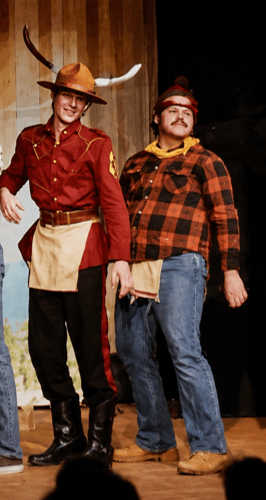
Although Tim wasn’t in the third show of 1988’s five-show season, he was in the last two. He played the comical Sheriff in Scott Martin’s wonderful melodrama, Sgt. Fenshaw of the Mounties. [NOTE FROM SHARI: Scott was on our staff for several summers. He is the writer, composer, and lyricist for many clever shows. Learn more about Scott in Part 16, Season Seven, 1978 of this memoir.]
Finally, Tim played a shy soldier on holiday who gets caught up in the affairs of four intermingling couples in the absolutely hilarious British farce, Move Over, Mrs. Markham, the last show of the season.
At the end of Tim’s third season, he had acted in 11 shows at Brooke Hills and four shows in college. He was building an acting resume at warp speed while also building sets and performing all the other tasks that the staff handled every day, from cleaning the toilets to hanging lights!

Sadly, all good things will overcome to an end, and 1989 was Tim’s last season on the staff. He continued to contribute to the success of the Playhouse in numerous ways, both onstage and off.
The travel trailers the staff had been housed in had reached the end of their lifespan. Luckily, the park said we could use one of the houses in the park. Unluckily, it was the house that had been used as a haunted house for several years. When it was used by the Gist family who owned the farm that became Brooke Hills Park, it was lovely. A sturdy stone house with a big front porch painted white with black trim. It was located across the park road from the golf clubhouse. It needed work.
“Shari,” said Tim, “you told me, ‘I only need you for your back.’ It turned out you also needed me because the house we were moving into didn’t have electricity or a working toilet. Crystal Motto had joined the staff in 1988, and this season, she was named our Technical Director and Designer. Crystal insisted we have a toilet! I worked on the house to get it ready while others on the staff worked on the sets for the first two shows. They also came to the house and did the painting, covering up the walls that had been painted black for its haunted house days.
“I think nearly every staff member over the years went skinny dipping at one time or another in the park pool. We’d look to see where the trash container (heavy wood with a roof and a door to get at the big rubber trash barrel inside) was on the pool side of the fence, then we’d drag another trash container on the outside of the fence to the one inside, climb up on the outside one, step over the fence onto the other trash container, and we were in! After a hot day of working outside and then performing in the barn, that swim was heaven!
“There was a short, split rail fence that ran from the back end down to the road to keep people from driving around the barn in the grass. Eventually, that fence started looking pretty nasty with broken or shaggy looking rails. Shari sent us out into the park to find a better-looking fence, and we switched out our broken rails for the park’s newer ones! I added cat burglar to my resume!”
Of course, Tim was also valuable on stage. In 1989, he was in three more shows. “In The Return of Sgt. Fenshaw,” said Tim, “I played Barnaby, the villain’s accomplice. Shari was directing, and she remembered a great bit for me from when the author/composer of the show was on the staff and directed it back in 1979. I wore a hump on my back, and with every entrance, the hump was moved to a different place, like the Marty Feldman character in Young Frankenstein.
“It didn’t take long for the audience to catch on, and I got a laugh on every entrance. For my last entrance, the hump was moved to my belly. I used a wide-legged walk and looked pregnant for the biggest laugh of all.
“I had a small part in You Can’t Take It with You, the third show. Once again, I was onstage with my parents’ great friend Sippy Hayman, who had one of the leads. And then I played Tony Scopec, a gangster, in the final show of the season, Bottom’s Up! That show still means a lot to me as our Playhouse production was written and directed by Gregg Kreutz, who directed me in Move Over, Mrs. Markham the previous season. The play was later published by Samuel French (now Concord Theatricals), and our cast is listed in every script sold.
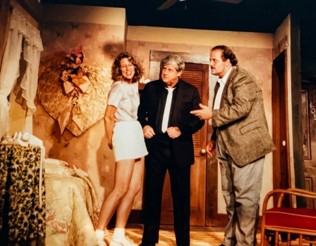
“At the end of the 1989 season, the crew struck the Bottoms Up! set and then dismantled the stage floor. That was probably the dirtiest job any of us had ever done at the Playhouse. Under the stage were 18 seasons of dust and dirt. We were all filthy and practically unrecognizable! During the off-season, Bev Brady’s husband, Ralph Brady, completely rebuilt the stage, leveling it and getting rid of the squeaks.”
Time passed, and in 1994, Tim married his high school sweetheart. They had two daughters before eventually divorcing. Today, Carrie is a licensed therapist in East Liverpool, Ohio and is the mother of Tim’s only grandchild, Emma. Holly, Tim’s younger daughter, is a chemist in Michigan.
Tim also returned to our barn stage in 1994. “The Playhouse was doing Two by Two,” said Tim, “a show they did in 1985, the year I was a young Playhouse volunteer, the year before I joined the staff. Two by Two tells the Biblical story of Noah and his family before, during, and after the flood. I had wanted to do that show since I first saw it in ’85, so I headed back to Brooke Hills to audition.
“Shari cast me as Shem, Noah’s oldest son. Just like ‘the old days,’ we rehearsed and learned the music first, then Shari blocked the show, and we rehearsed with the script over in the Franklin United Methodist Church, which had a piano and a social hall big enough to hold rehearsals. It wasn’t long until everyone knew their parts. It was a great cast, and we were having a lot of fun, UNTIL a little comedy called John Loves Mary closed on Sunday night. We struck that set, and put up the Two by Two set, composed of several platforms that had to be reconfigured from a house in Act I to the ark in Act II during the 15-minute intermission.
“On Monday, the crew added the finishing touches to the set, re-focused the lights, and had everything ready for our technical rehearsal that evening, the cast’s first rehearsal on stage. We sailed through Act I. The crew came out to reconfigure the set for Act II, and the shift took 30 minutes!
“Crystal Motto and Shari had collaborated on the set design. While the cast waited (as is often the case during tech rehearsals, but maybe not as long as this wait!), Crystal and Shari worked to get the three units to shift into the ark and stay together! Eventually, I thought I saw a solution. ‘What about C-clamps?’ I asked.”
When Tim spoke up, it was like a light bulb went on. Someone was sent downstairs to the kitchen/toolroom/shop for C-clamps. The platforms were put back into their Act I position as the house. ‘Clampers’ were assigned; the cast did the final number from Act 1, and the lights went to black. The crew came on and made the shift. It took fifteen minutes instead of thirty and fit into our intermission time. Over the run of the show, the shift got even faster.
In 2025, Tim and Carrie Cronin, a staffer you’ll read about in future parts of this memoir, became engaged. I saw Carrie and her incredible voice in Nunsense in 2023, and I hope they both return to the Playhouse stage soon!
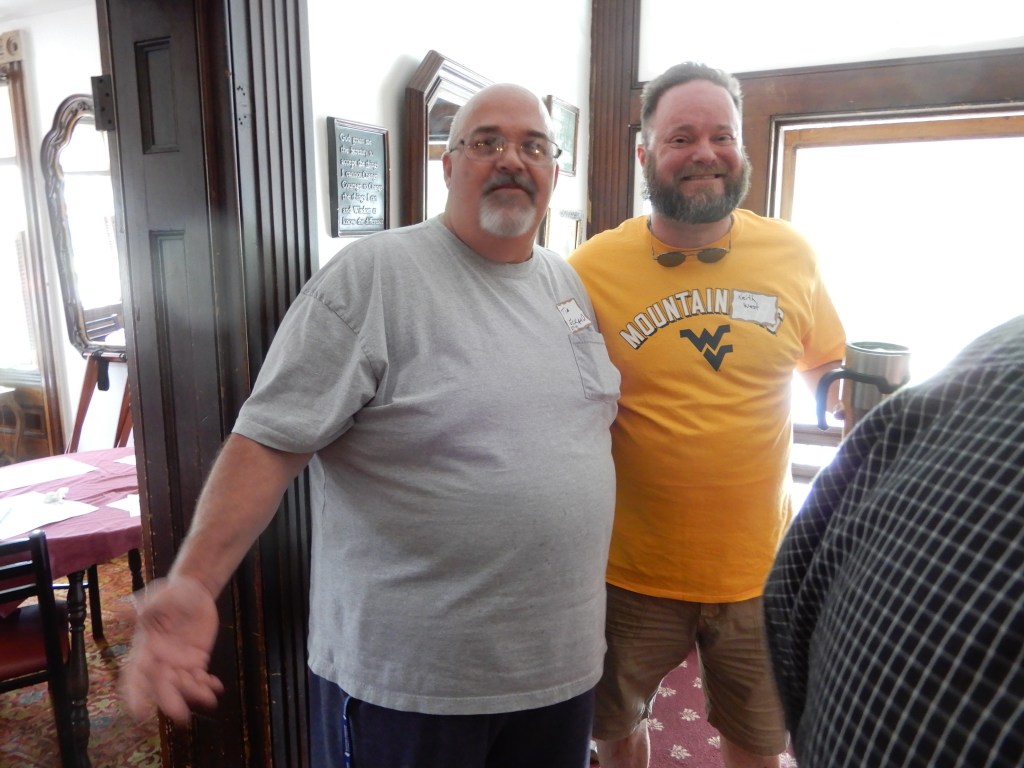
to celebrate the 50th season of the Playhouse.
PAM TOOT LANFORD REMEMBERS
A few years ago, when I started collecting information for this memoir, I needed help. I had a list of shows for each season, but I didn’t have the names of all of the staff members for each summer. I reached out to former staffers, and together with the aid of their scrapbooks or boxes of old program booklets and inserts, we were able to come up with the staffs for each season.
Eventually, Heather Vulgamore Deerfield remembered that partway through the 1986 summer, one of the staff members had to depart, leaving us short-handed. Heather reminded me, “You hired a beautiful, tall blonde girl from East Liverpool to replace the person who left. Al Martin was in love with her.” Up until recently, my 1986 staff notes listed nine names and “tall, beautiful blonde girl from ELO.”
When I was working with Bill Deerfield on his memory piece for the previous chapter, he identified the “tall, beautiful blonde from ELO as Pam Toot!” Oh, happy day! Like so many other previous employees, I found Pam on Facebook.
Pam Toot, from East Liverpool, Ohio (ELO), had just graduated from Mt. Union College and was looking for something to do. She had auditioned at the Playhouse and was cast in the third show of the summer. She knew Kelsey Hedrick, a staffer from 1982, and since we had an opening, Kelsey suggested that she join the crew.
Pam had acted in East Liverpool High School productions and several shows at Mount Union: Pygmalion by George Bernard Shaw, Ghosts by Henrick Ibsen, Agnes of God, where she played Agnes, by John Pielmeier, and several one-acts. Those were all serious plays. She’d have a whole other experience at the Playhouse, acting in a murder mystery and a crazy farce.
“I have quite a few memories from my short, but fun time, at Brooke Hills. I was housed in a travel trailer behind the barn with Karen Hall, who was the theatre’s tech director. When it rained, I always worried about the trailer leaking, but it never did.
“Also, I remember how dark it would be out on that hilltop away from artificial lights. I could really see the stars, probably the clearest I’ve ever seen them.
“I’m 6’ tall, so my other concern was always being careful of my head when I stood in the small trailer, and I barely fit in the bed! But it was all a part of the Brooke Hills experience!
My first show was Speaking of Murder. Because I’m tall, my mother always made my clothes. She made the dress you can see in the photos from this mystery. She was an excellent seamstress, and I know the Playhouse was grateful for her skills.
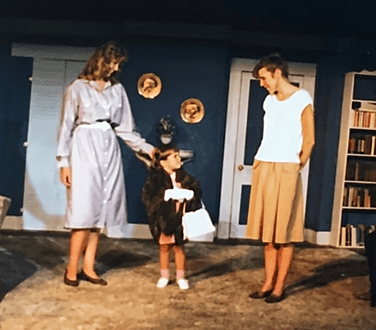
“There was supposed to be a puppy in Speaking of Murder. I don’t remember if a puppy couldn’t be located or if there was no place to keep a puppy during the run of the show, but a kid’s little stuffed animal puppy was used.
“One of my friends from college theatre, who went on to become an actor, came to see the show. He saw that kid’s stuffed toy puppy and was horrified!
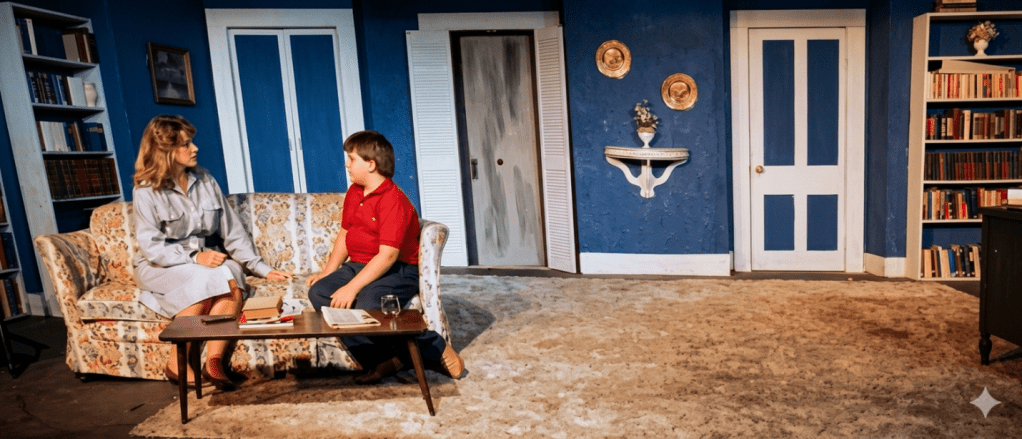
“Another vivid memory is of the staff, all fun kids, sitting around after the show, when the audience had departed, drinking fuzzy navels and eating Doritos drizzled with cheese from a can! I had such a good time! It was a great summer.
“I was also in the final show of the season, a British farce called A Bedfll of Foreigners. My dad was a Presbyterian minister, and I remember being a little worried on the night he came to the show. I played Simone, a French strip-tease artiste, and the mistress of one of the husbands in the show. I actually had to do a little stripping, and well, Dad=minister=a little worry. But I shouldn’t have worried; Dad had a sense of humor.”
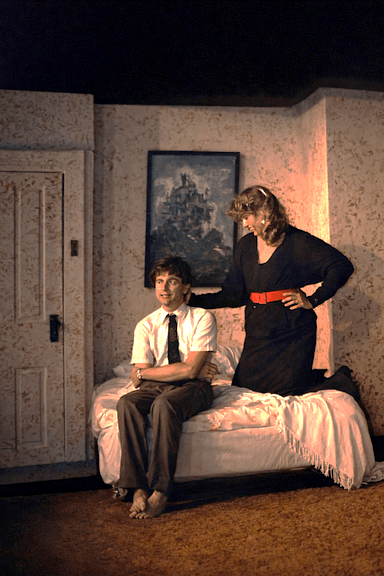
A Bedfull of Foreigners, 1986
At the end of the season, Pam headed to Ohio University to work on her master’s degree in biology, and while she was there, she met David Lanford. After receiving advanced degrees, the couple headed for Texas but eventually moved to Silver Spring, Maryland. Pam attended the University of Maryland and received her Ph.D. in biology.
Pam’s special area of expertise is the cochlea, that spiral chamber in the ear. Today, Dr. Lanford is a research compliance officer with the title Director of Research Operation Innovations. “I make sure people are looking for creative solutions in their grant applications and make sure they are playing by the rules.
Although she hasn’t acted since Brooke Hills, she has been a member of a professional-level choir at Foundry United Methodist Church in Washington, D.C., the church the Clintons attended while they were President and First Lady.
David is a graphic designer with the Smithsonian Institution as one of his clients. Their daughter, Roe, was in plays while in college. Today, she is a 4th-grade teacher in Baltimore.

CHOREOGRAPHING SCENE CHANGES
We never had an act or front curtain at the Playhouse, one of those lovely velvet curtains that hides the stage before the show starts and often opens and closes during the show to mask the scene shifts. When there is an act curtain, a couple of lights can be lit behind it to help the stagehands or stage crew see what they’re doing, where they’re going, and who they might run into during shifts. It also means the crew can wear shorts and T-shirts. The lack of that curtain meant that everyone working the shifts had to dress in dark (preferably black) colors from head to toe (always fun in the unairconditioned barn, haha), stand off stage with their eyes closed for the last several lines of dialogue before the scene ended with “lights out” to acclimate their eyes to the darkness, and know exactly where they were going. If we had had an act curtain, we would have needed someone to open and close it, and when it was open, it would have co-opted some of our precious backstage space. We really were better off without one, but that lack presented some challenges.
Because there were breaks in the barn siding and it was still light at the 8:00 p.m. curtain time, the first few shifts were usually easy with some light hitting the stage. Later in the evening, shifts were often challenging. The solution is to choreograph the shifts. The directors made up a list of what had to come off stage after one scene and what had to go on for the next scene. Cast members who didn’t have a costume change were often asked to help with big shifts—grab a piece of furniture on their way off stage. Sometimes, they brought a new piece of furniture or a prop back on as well. The shift crew did the heavy lifting, and it ran the gamut from moving sofas and turning double-faced flats to cleaning up broken crockery from an onstage fight.
Everyone on the crew worked quickly, in silence and very low light. Shifts between scenes were often very challenging, and we would strive for shifts of 30-45 seconds or less. Shifts between acts weren’t so rushed, but we always wanted them to look slick and efficient as well. Routes for each crew member were mapped out so the shift went smoothly without people bumping into each other. Glow-in-the-dark tape on the floor was used for spike marks, enabling the crew to put the furniture and props in the exact same place for every performance.
When you think about some of the large musicals we did over the years (Oklahoma!, The Music Man, The Sound of Music, My Fair Lady, and so many more), perhaps you can appreciate the work the backstage crew did to make the performances flow.
I know I have a lot of favorite things about being at the Playhouse for 24 summers, but I really loved how people would sit and strain to watch the scene shifts, often waiting until after the shift at the act break before standing to stretch or go downstairs to use the facilities or get a snack. Several times a summer, audiences would reward the stage crew with applause after a shift was completed, and that’s the fun thing about not having an act curtain.
OKAY, I ADMIT IT, 40 YEARS LATER, IT WAS A BAT!
It’s sad but true. We had a bat that lived high above the stage in a roof rafter for most of the 24 summers I spent at the Playhouse. Every darn day, someone would have sweep up the bat droppings from the stage, usually while setting the props and preparing the stage for the evening performance. I knew then that bats were beneficial mammals and were a protected species, but, oh, how I wished that our bat would find a new abode. Bats are not good for business! I only remember one time when the bat showed himself during a performance. I was sitting in the back row of the audience, on the last platform of seats which is raised five steps above the barn’s floor. All of a sudden, the bat swooped out through the audience from behind the proscenium. The audience started squealing and ducking as it made a few left to right to left swoops. I stood up and yelled, “BIRD! IT’S A BIRD!” a big lie. “Everyone freeze.” And they did—audience members and actors on stage as well.
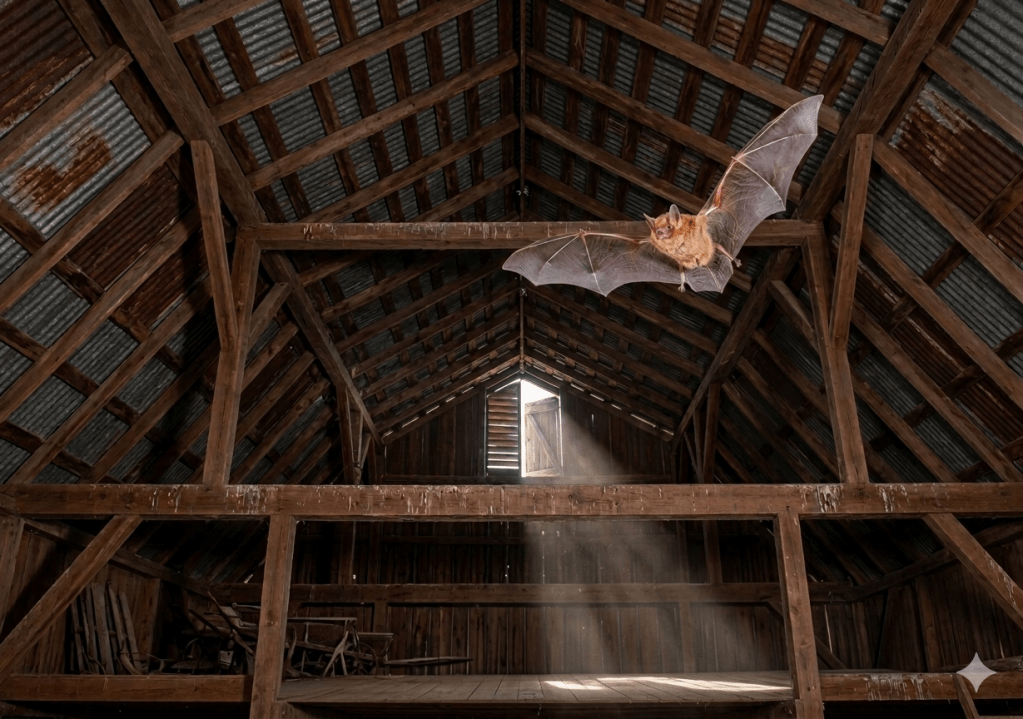
The bat headed toward the back barn wall behind me, and the craziest thing happened. It ran into the wall and dropped like a stone down onto the barn floor. I had a Styrofoam cup of coffee in one hand and a program in the other. I flew down those few steps, flung the coffee out of the cup and through the open back door, and then plopped the cup over the bat just as he started stir back to consciousness. I slid the program under the cup, trapping the bat inside, and headed for the open door, shouting, “No problem. I’ve got him. He’s okay.”
The actors who, had frozen mid-song, went back to the beginning of the number, started over and carried on. The audience? Well, they were real troupers. When the music re-started, there was a sigh of relief and they settled back into the moment.
I headed down the tall steps and out into the nearby field. The now-conscious bat was scratching the sides of the cup and making chilling bat sounds, creeping me out while I was walking away from the barn. When I decided I was far enough away, I held the cup as far away from me as possible, took the program off the cup, gave it a little underhand toss, and the bat took off immediately!
Then, I started to shake uncontrollably! I couldn’t believe I had that bat in a cup in my hand! Big eeeeeeeeek! I sat in the lobby for the rest of the show, and when it was over and the audience was gone, I went back upstairs.
I looked at that back wall. There was a knothole right near the place where the bat had hit. I think that his radar pinged through that knothole making him think he had clear flying ahead, then he got an inch or two off course while zigzagging through the barn and BAM! He flew into the wall, temporarily knocking himself silly, and giving me time to get him into my cup.
The droppings on the stage were back a few days later, so he had found his way back home, and apparently, he’d learned his lesson as he never appeared during a show again!
REMEMBERING SIPPY HAYMAN
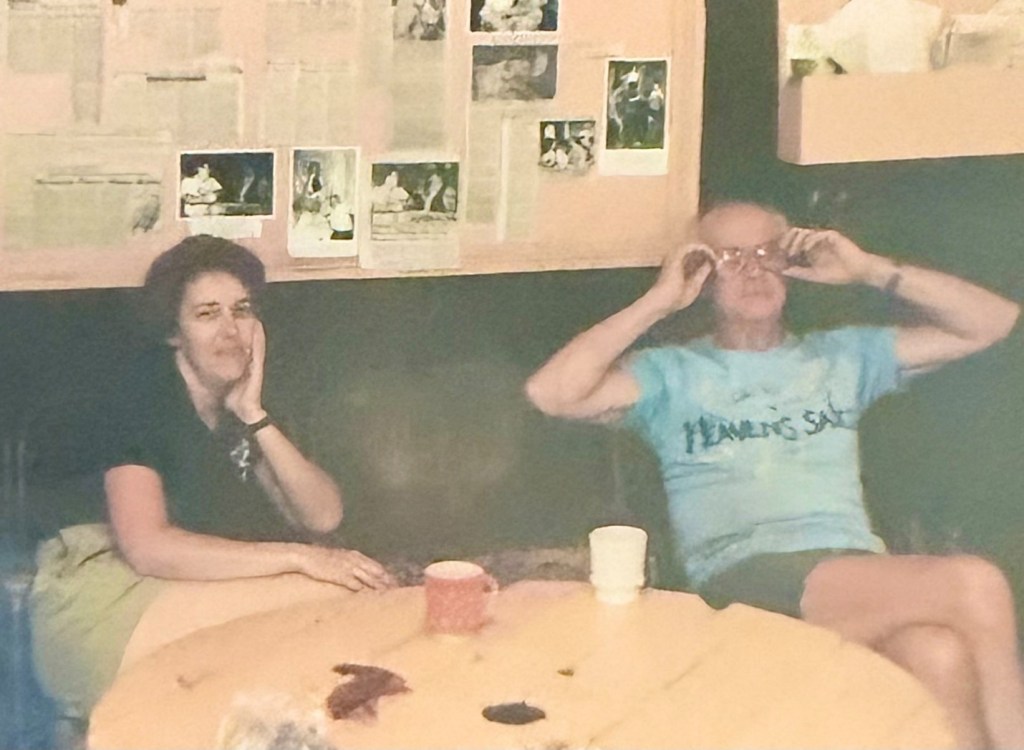
Tim Eckhard mentioned Sippy Hayman in his memory piece, and it brought back fond memories of an incredible woman. I decided to see if I could find her. Sadly, I found her obituary. Sippy had died May 21, 2024. I started writing this memoir in 2021. I wish I had tried to contact her back then. Sigh…
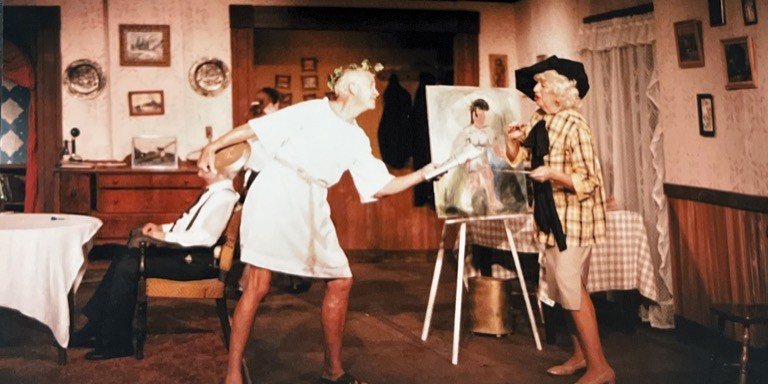
Since I don’t have photos or cast lists of all the shows from my years at the Playhouse (1972-1995), it’s hard to know all of the shows Sippy was in during those years. I know of four: Breakfast with Les and Bess (1986), You Can’t Take It with You (1989), The Cemetery Club (1993), Steel Magnolias (1994), and Driving Miss Daisy (2001). I have a sneaking feeling that there were many other shows during my tenure and even more in the years that followed.
Sippy was larger than life with her wild head of hair, and she reminded me of Carol Channing, but with a much more pleasing voice. Sippy’s husband Milt was a lawyer, and they lived in Steubenville. Sippy and Milt were two of the founders of the Steubenville Players, and when Steubenville initiated bus tours of the numerous murals around the city, Sippy was one of the first to sign up as a tour guide. She was a born promoter of her adopted city.
I don’t know who wrote her obituary, but it captured her spirit and joy perfectly. I’m happy to share it here:
Sylvia “Sippy” Hayman, a beacon of laughter and an embodiment of joie de vivre, left the stage of life with the same grace and humor she carried throughout her 92 years. Born on June 12, 1931, in the bustling city of Cleveland, Ohio, Sippy grew to become a woman whose spirit was as unyielding as her wit was sharp. On May 31, 2024, at the age of 92, she took her final bow in Morgantown, W. Va., leaving behind a legacy of chuckles and cherished memories.
Sippy’s early days were filled with the sort of adventures you’d expect from someone who would later excel as a tour guide; she was always curious, perpetually ready for the next big discovery. Her thirst for knowledge led her to Ohio State, where she met her husband, Milt. As alumni, they could regularly be seen sporting the red and gray at all of The Ohio State football games.
Her career was as varied as her interests, which is to say, immensely. From directing community theater with the panache of a Broadway veteran to giving the liveliest tours that anyone in Ohio could remember, Sylvia “Sippy” Hayman was a force of nature. Whether on stage or guiding wide-eyed tourists, she infused every moment with an infectious enthusiasm that was impossible to resist.
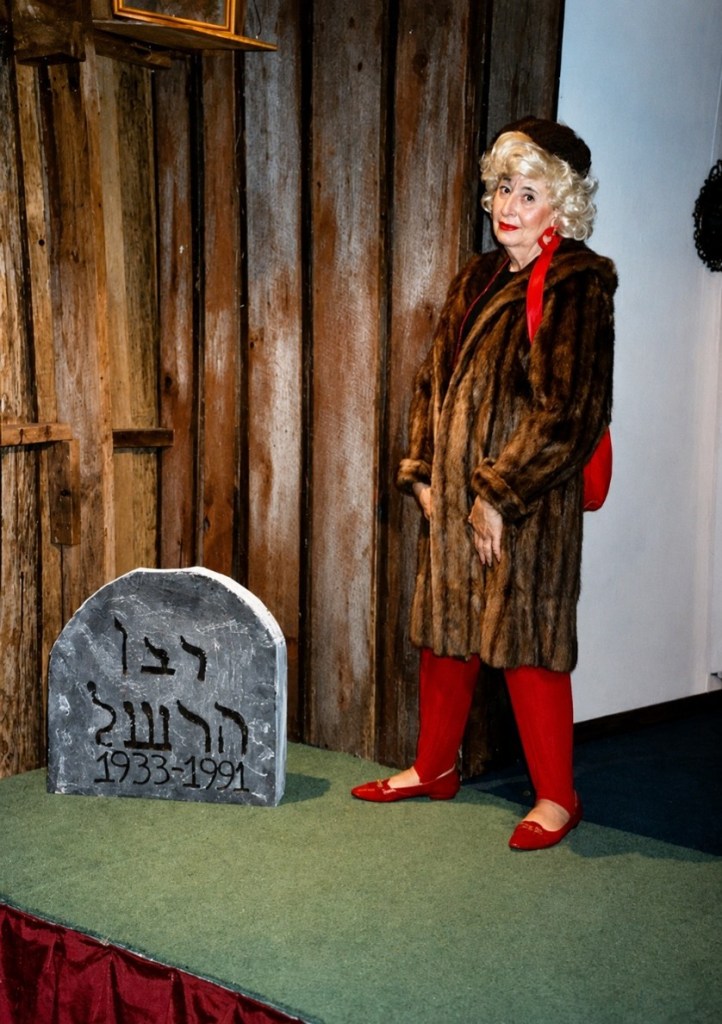
Offstage, Sippy was an avid competitor, swinging racquets like a pro on the tennis courts and mastering the finesse required in racquetball. She captured moments of beauty through her lenses. When she wasn’t conquering sports or capturing light, her fingers danced with yarn as she crocheted, leaving a trail of cozy creations in her wake.
An insatiable reader, she devoured books with the same gusto she did her cooking—a symphony of flavors that often left friends and family begging for her recipes. But the true spice in Sippy’s life was her sense of humor. She could find the funny in just about anything, turning ordinary days into episodes of joy and laughter. Sippy was described by those who knew her best as funny, optimistic, and spirited, three words that only begin to scratch the surface of such a vibrant soul. She was a comedian even in moments that didn’t call for comedy, for she knew that life was better when punctuated with a smile.
She is predeceased by her loving husband, Milton Hayman, her son, Jeffrey Hayman, and her brother, Alex Rubin. Sippy’s legacy is carried on by her adoring daughter, Sherri Hayman, and her grandchildren, Michelle and Scott Hayman. She was the much-beloved sister to Maureen Sloane and Leatrice Taylor, and a cherished aunt to her nieces Rebecca Terry, Rachelle Thomas, and Stefee Knudsen, as well as her nephews Ira and Jan Rubin, remembering Brett Rubin in spirit.
As the curtains close on a life so vividly lived, those who took part in Sippy’s extraordinary journey will remember her as the woman who could turn the mundane into the marvelous, who always had a quip at the ready, and whose optimism remained unwavering against the odds. Sylvia “Sippy” Hayman has exited stage left, but the echoes of her laughter will resonate forever in the hearts of those who loved her. Rest in peace, dear Sippy, and may your final act be as joy-filled and resplendent as the many that came before.
1986 COMES TO A CLOSE
I know I say this about every season, but we were so fortunate to have talented, good-natured, dedicated kids on the staff every year. At least this held true for my 24 seasons. The kids worked so hard day after day with hardly enough time off to do their laundry. This year’s group was so close that many of them are friends (or spouses!) to this day.
1986 turned out to be our final 6-show season. I have a vague memory of the meeting of our board discussing the pros and cons of cutting down to five shows. I think the only con we came up with was thinking there would be less income as our regulars would probably be attending one less show.
The pros, however, certainly outweighed the cons. We’d only have to build scenery, costumes, and props for five shows instead of six, a major money-saver. Each show would run two weeks, so our employment term would still be 13 weeks, and our season would still be ten weeks. The more we talked about it, the more we loved the idea of eliminating the shows that had a one-week run. After all, those casts worked just as hard as the casts whose shows ran two weeks.
We’d have to wait and see how the box office responded, but as always, if we made more money, the staff salaries would increase, and the meals would improve.
1986 had been another great year, except for that bat!


